
Last updated November 21, 2026
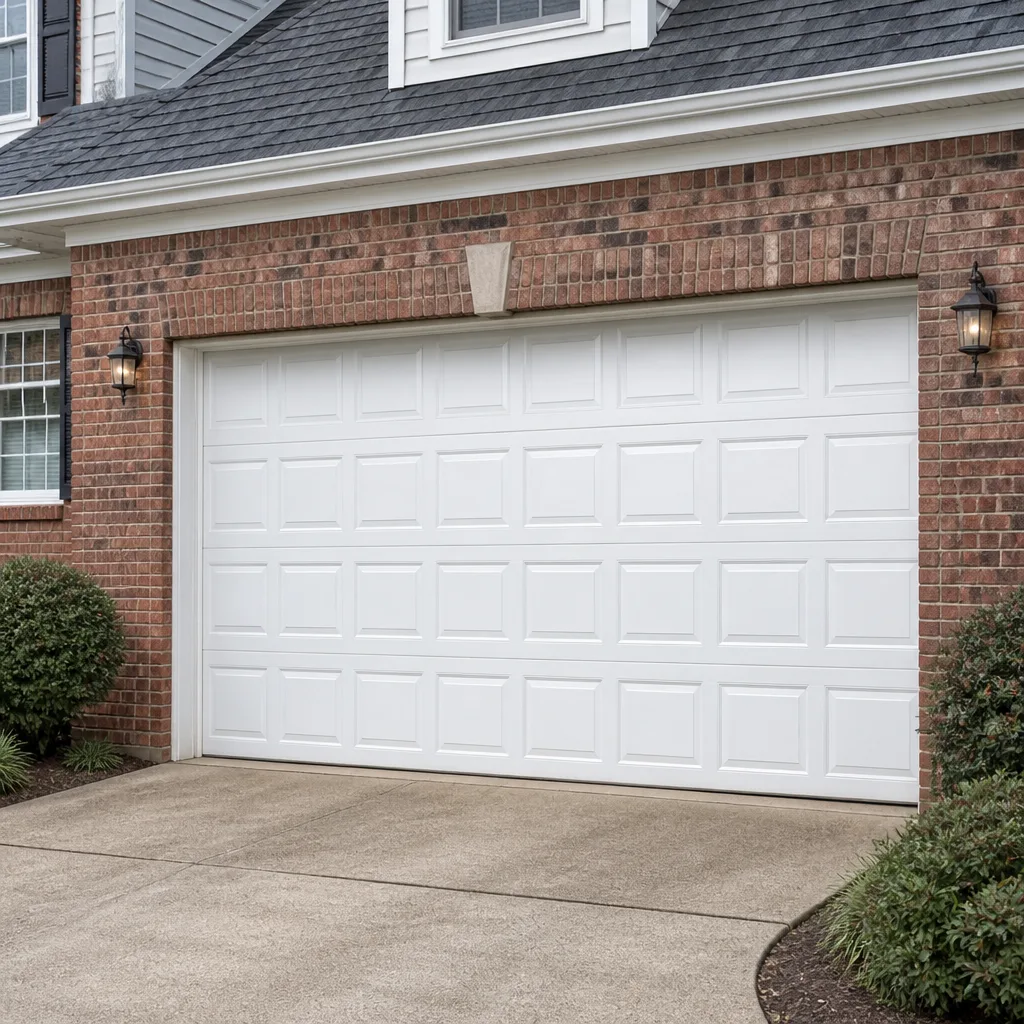 Raised-panel steel
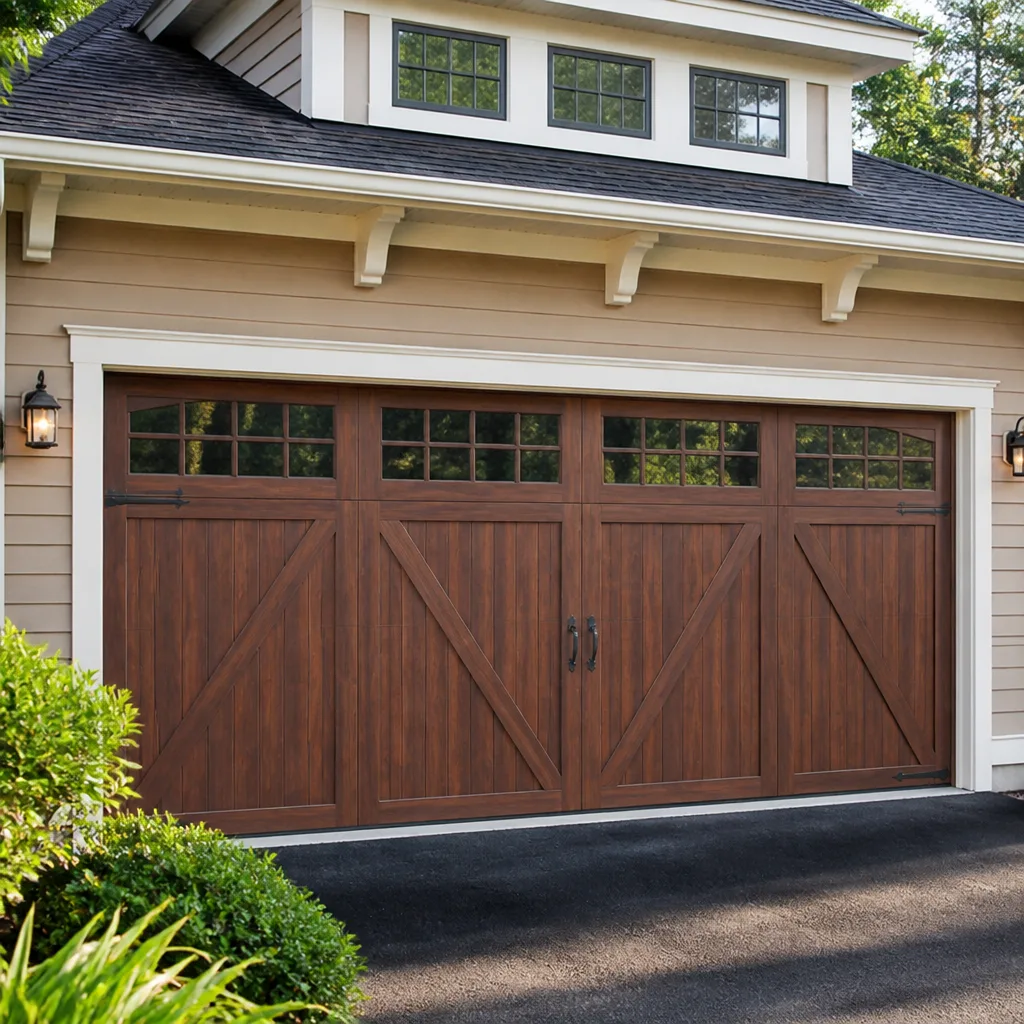 Carriage house
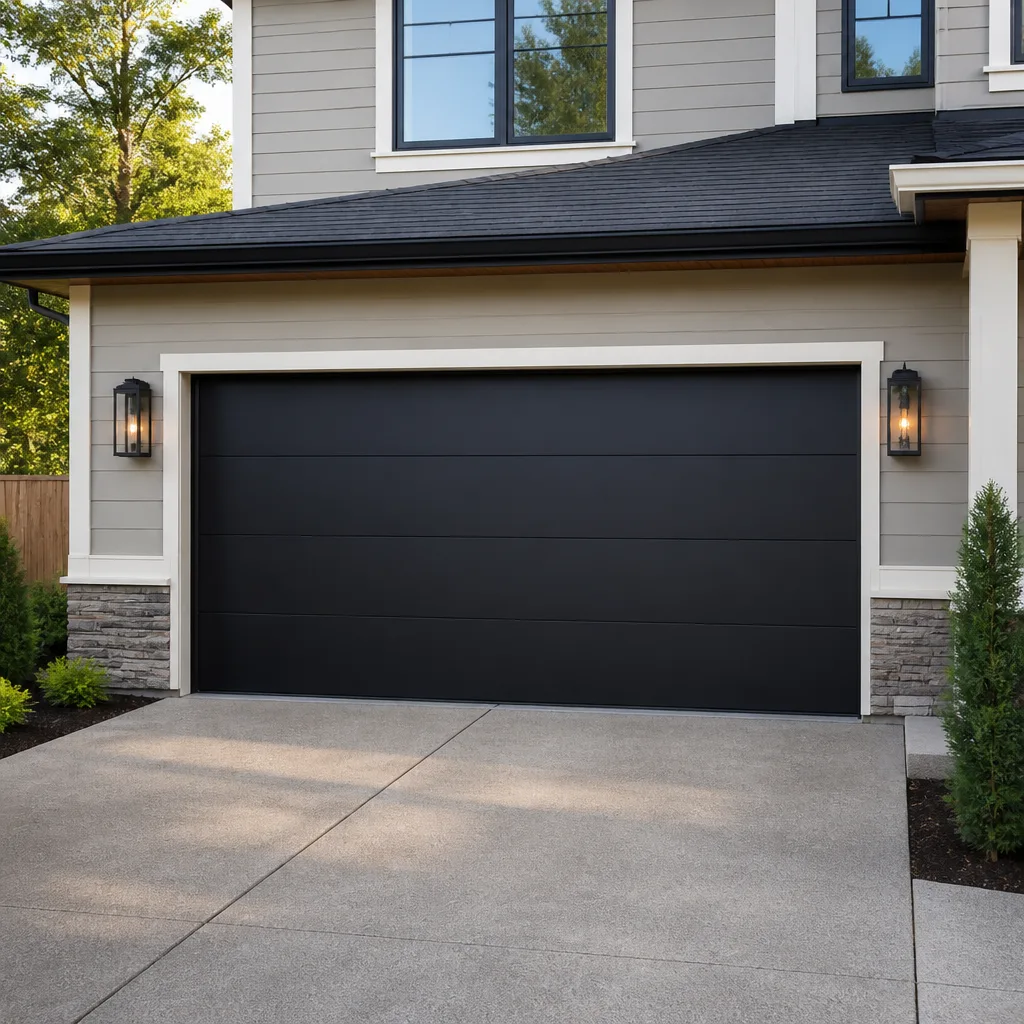 Modern flush
 Full-view glass
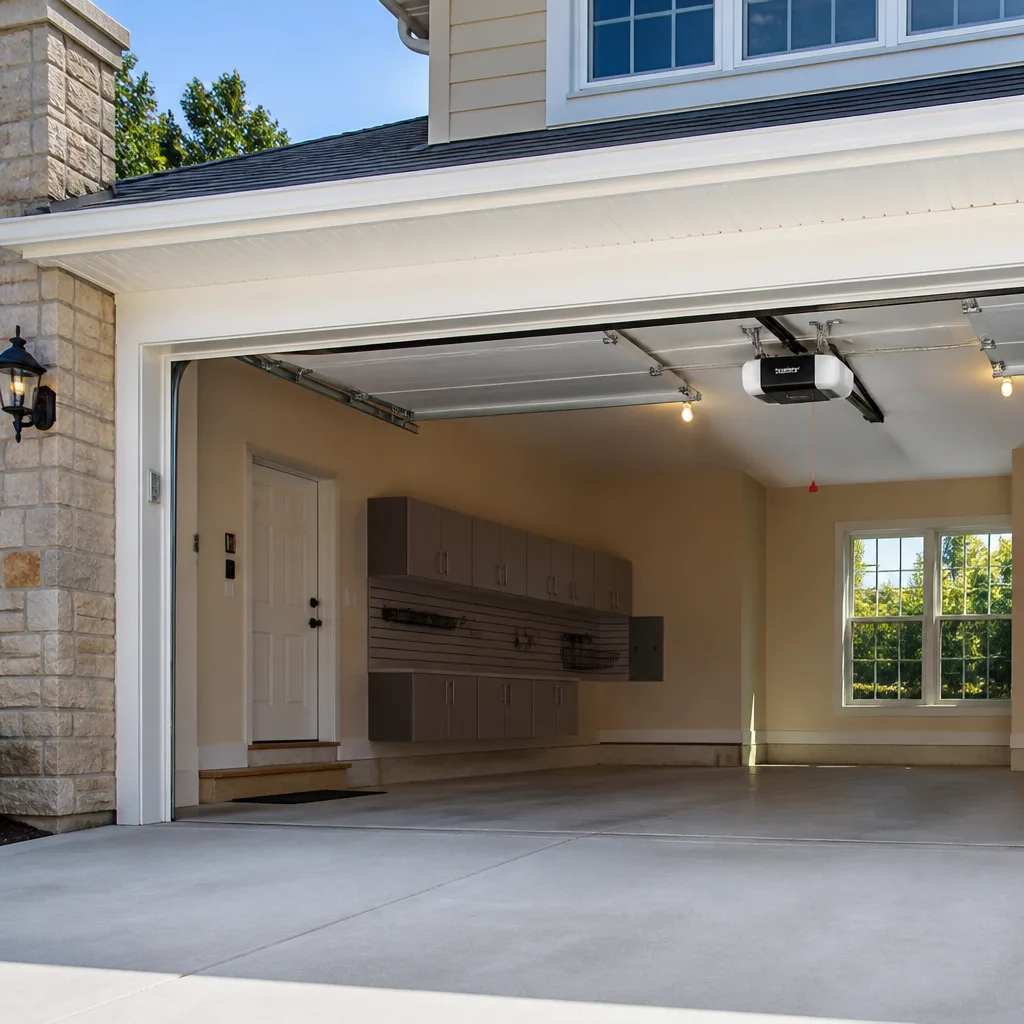 LiftMaster openers
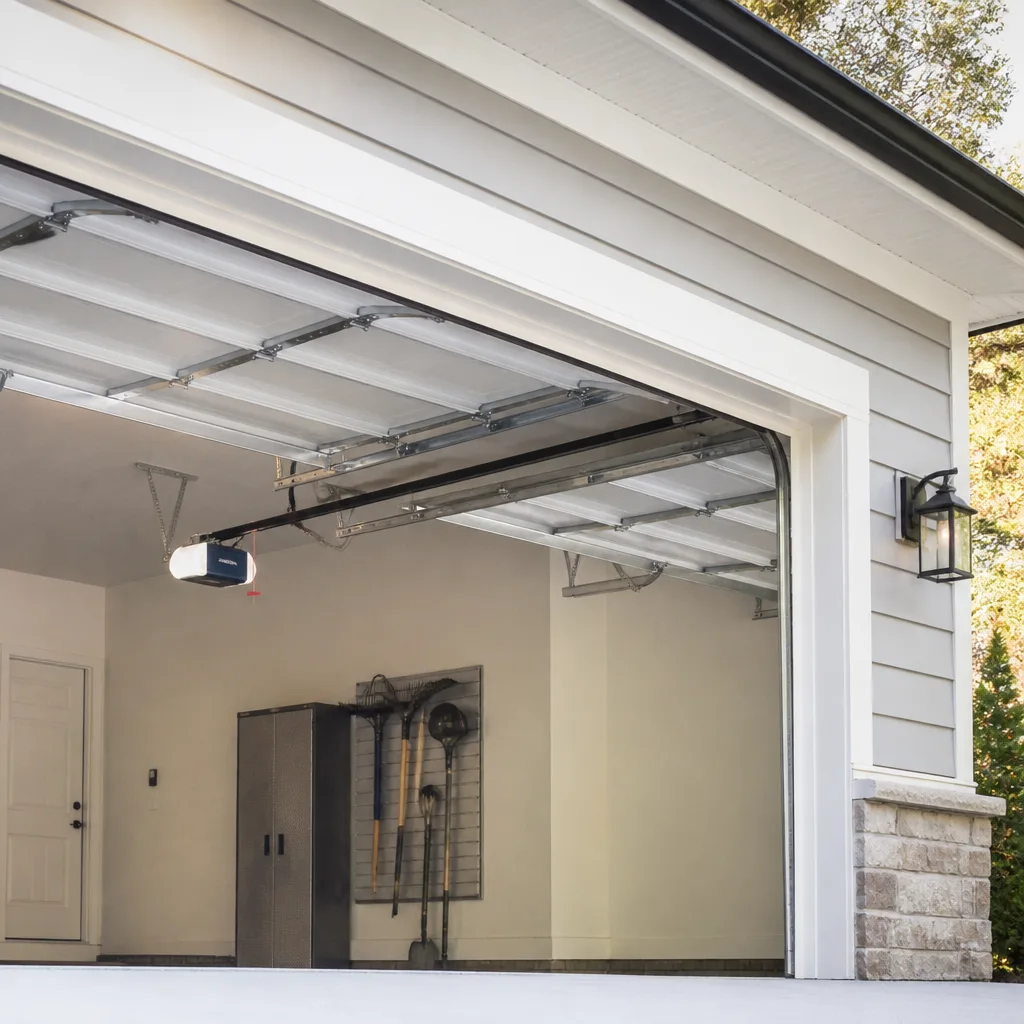 Chamberlain openers
Full 25-point door and opener safety check with every visit - springs, cables, rollers, tracks, and your LiftMaster or Chamberlain opener included
You get a price before we start. It does not change when the pro arrives.
Get your free estimateHow to Hire a Garage Door Contractor in Chevy Chase: A Step-by-Step Guide
“Are you licensed and insured?” is a floor, not a filter. Almost anyone with a business card will answer yes, and the answer tells you nothing about whether they can actually work on your door. The question that splits a technician from a salesperson is narrower: can you repair the existing torsion spring system on my door, or is your business built on replacing it? Chevy Chase is a tricky place to hire, because the contractor pool here runs from DC-licensed multi-trade companies to small garage-door-only shops, and the addresses sit on both sides of the DC-Maryland line. What follows is the sequence we’d walk a neighbor through: the specific diagnostic questions to ask before anyone shows up, how to read a quote line by line, and how to verify a contractor actually services the brand you own.
Quick Answer
Hire a Chevy Chase garage door contractor by verifying jurisdiction-specific licensing for your address, asking component-specific questions (spring type, opener brand compatibility, parts availability for older units) before scheduling, and demanding an itemized written quote that names springs, cables, and rollers with specs. A legitimate contractor will answer technical questions without deflecting, will repair the door you own before recommending replacement, and will set the price in writing before any work starts.
Styles & brands we work with
- Raised-panel steel
- Carriage house
- Modern flush
- Full-view glass
- LiftMaster openers
- Chamberlain openers
Table of Contents
- Why Hiring in Chevy Chase Is Harder Than It Looks
- DC vs. Maryland Licensing: What Applies to Your Address
- The Diagnostic Questions to Ask Before You Schedule
- How to Read a Garage Door Quote Like a Technician
- Verifying Brand Compatibility Before You Book
- What a Legitimate Service Call Includes
- Red Flags: Safety Pressure Disguised as Concern
Why Hiring in Chevy Chase Is Harder Than It Looks
Chevy Chase isn’t one market. It’s a cluster of neighborhoods straddling the District line, and the housing stock runs from pre-war homes with original wood doors to newer builds with insulated steel and modern trolley openers. That variety is exactly what makes hiring complicated. The company that handles a 1990s Craftsman opener in a Chevy Chase DC bungalow may have no idea what to do with a Wayne Dalton iDrive or a Raynor door with a proprietary track system in Chevy Chase, Maryland.
Then there’s the contractor pool itself. You’ll find three rough types operating around Chevy Chase:
- Multi-trade generalists with proper DC licensing who treat garage doors as a small slice of a much bigger business. Competent, but the technician who arrives might not be the garage door specialist.
- Garage-door-only shops that live and breathe springs and openers, but whose licensing and insurance need checking for the specific address.
- Sales-driven installers whose business model is replacement. They’ll diagnose your door as “at the end of its life” whether or not that’s true.
The type of contractor matters less than whether they can work on your specific door and opener without substituting parts that don’t belong. A technician who can name the spring system on your door probably knows how to adjust it safely. One who can’t probably shouldn’t. That single test cuts through most of the noise in Chevy Chase.
DC vs. Maryland Licensing: What Applies to Your Address
Chevy Chase addresses fall on both sides of the DC-Maryland boundary, and the licensing that applies to your job depends on which side you’re on. A contractor properly licensed for a home in Chevy Chase, DC may not automatically hold the Maryland credentials required for a job a block away in Chevy Chase, Maryland. This is the first thing to sort out, and it’s the one most homeowners skip.
Before you book, ask each contractor plainly:
- Which jurisdiction is this job in, and are you licensed for it? Your address decides the answer. Ask them to confirm in writing or on the quote.
- Is the technician who’ll arrive covered by your insurance? Licensing and insurance aren’t the same thing. The company’s coverage should extend to whoever shows up.
- Can you provide proof of both? A legitimate company will send license and insurance documentation without a fight. If getting that information takes three phone calls, that’s an answer in itself.
We say “licensed and insured as their state requires” deliberately. In our experience the trades vary, the paperwork varies, and the address matters more than the marketing. Never take “we’re fully licensed” at face value when you’re near a state line. Ask which license, for which jurisdiction, and get it on the quote.
Permits are a separate question. Some structural or installation work may need a permit from your local building department, and the requirement depends on the scope. When in doubt, ask your city’s building department directly. It’s a five-minute call that settles the question faster than any contractor will.
The Diagnostic Questions to Ask Before You Schedule
The phone call before the appointment is where you separate technicians from salespeople. Ask these questions and listen to how comfortably the answers come. A garage door specialist will answer in specifics. A salesperson will deflect toward a free estimate or a replacement quote.
- “What spring system does my door use?” The two main systems are torsion springs (mounted on a horizontal shaft above the door) and extension springs (running along the horizontal tracks on each side). A technician will ask you what you see or want a photo before answering. A salesperson will guess.
- “Can you work on my specific opener brand?” Name your opener – Chamberlain, Genie, LiftMaster, Craftsman. A specialist should be able to tell you whether they carry the right logic board, remote frequency, or drive belt for that platform.
- “Can you source parts for an older unit?” If your door or opener is 15 or 20 years old, parts availability is a real question. An honest contractor will tell you what’s still available and what isn’t, rather than quietly substituting incompatible components.
- “Do you replace springs one at a time or as a matched pair?” Matched pair replacement is the standard, because springs made and cycled together tend to fail together. A contractor who quotes one spring as the default is either cutting a corner or planning to upsell you later.
- “Will you itemize the quote before any work?” The answer should be yes, and you should get the quote in writing with the price set before the first screw turns.
Ask these whether the job is a spring replacement, a garage door opener repair, or a routine garage door repair. The same diagnostic discipline applies across the board.
How to Read a Garage Door Quote Like a Technician
A quote that says “hardware adjustment” and “spring replacement” without specifics is a red flag. The right quote tells you exactly what parts go in, what condition the existing components are in, and what the price covers. Vague line items let a contractor pad the bill later or substitute cheaper parts than you expected.
Here’s what an itemized quote should distinguish between:
- Springs: type (torsion or extension), size or wire gauge, and whether it’s one spring or a matched pair. A spring price for one spring isn’t a pair price – a pair typically costs about twice a single spring, because two springs go in.
- Cables and drums: whether they’re being replaced as part of the spring job, and why if so. They’re a safety-critical pairing.
- Rollers: type (nylon or steel), quantity, and whether any are seized or worn.
- Tracks and hinges: any being adjusted, straightened, or replaced, with the reason.
- Opener components: if the opener’s involved, which part (logic board, gear, belt, capacitor, receiver) and why.
- Labor: what the price covers, and whether it includes final balance and safety check.
A vague quote isn’t automatically dishonest. But when the line items are clear, you can compare two bids fairly and see where the numbers diverge. The written estimate sets the final price, so get the quote before anyone touches the door and confirm the price won’t change once the work starts. On spring and opener work, that written number should stick unless the technician finds something genuinely different from what was described on the phone – and if that happens, you should hear it before the work continues, not after.
| Job type | What the quote should list |
|---|---|
| Spring replacement | Spring type, wire gauge, one vs. matched pair, cables and drums if included |
| Opener repair | Brand and model, failing component, replacement part, labor |
| Roller and hinge service | Type, quantity, and which specific rollers or hinges |
| New installation | Door model and brand, opener model, track, springs, hardware, removal of old door |
Verifying Brand Compatibility Before You Book
Garage doors and openers aren’t interchangeable across brands the way generic hardware is. Springs have specs, tracks have profiles, and openers have logic boards and remote frequencies that matter. A contractor who services every brand isn’t automatically right for yours – but a contractor who can name your brand confidently and describe its quirks usually is.
When you call, put your brand on the table and see what comes back:
- “Do you work on Amarr doors?” A yes with specifics – panel types, track configurations, part availability – tells you they’ve actually been inside one.
- “My opener is a Craftsman. Can you diagnose it before recommending replacement?” Older Craftsman units are everywhere in Chevy Chase, and the right answer is “yes, we’ll diagnose first.”
- “What about a Wayne Dalton or Raynor door with a proprietary track?” These are common in the area, and they’re where generic contractors tend to substitute incompatible parts or push a full replacement when the door only needs a spring or track adjustment.
The best litmus test is the one that leads this guide: “Can you repair the existing torsion spring system on my door, or is your business model built on replacing it?” A contractor who works on the brand you already own can answer this without turning it into a sales pitch. That’s the difference between a technician and an installer with a sales quota.
This is why brand fluency matters as much as brand coverage. A contractor who hands off to a second company when they hit a door they don’t know leaves you chasing two different jobs. One call, one specialist, one clear answer is the goal. That’s the approach we take at Chevy Chase Garage Door Repair – working on the brand you have, diagnosing first, and repairing before recommending replacement.
What a Legitimate Service Call Includes
A proper service call is more than the repair itself. It’s a diagnostic pass, a clear explanation of what’s worn, a written price before work, the repair, and a final balance and safety check. If any of those pieces are missing, the call is incomplete – even if the door works afterward.
At a minimum, expect the technician to:
- Inspect the full system before working – springs, cables, drums, rollers, hinges, tracks, and the opener. Not just the part you called about.
- Explain what’s failing and why in plain terms, without jargon tricks.
- Give you a written quote before any work starts and get your agreement.
- Do the repair, then test and balance the door – check the travel limits, the force settings on the opener, and the reverse function.
- Tell you what’s worth watching and what’s fine. A technician who says “your rollers have another year or two” is being honest. One who says “everything needs replacing” probably isn’t.
On the urgent side, garage door installation and full replacements are scheduled work – you’ll get a free measure and a written price before anything’s ordered. Repair and emergency calls are different, and that’s where same-day service can genuinely help. Our technicians have up to 15 years of experience, and we treat a service call as a diagnostic first and a repair second.
Red Flags: Safety Pressure Disguised as Concern
The most effective high-pressure tactic in this trade isn’t a discount. It’s fear. A technician who arrives and immediately warns that your door “could crush someone,” “might not have a safety reverse,” or “needs a full replacement for safety” before they’ve shown you the actual failing part is doing sales, not diagnostics. Safety concerns are real – springs under high tension genuinely can injure people, and a door without a working auto-reverse is a real hazard. But a legitimate contractor explains the risk in specifics and gives you the repair option, not just the replacement.
Watch for these:
- “Your door is unsafe, we need to replace the whole thing.” Ask what specifically is unsafe. A failing spring is a spring problem. A door off balance is a balance problem. Replacement is sometimes right, but it should follow a diagnosis you can follow.
- The number changes once the technician is inside. The written estimate sets the price. If the job genuinely differs from what was described on the phone, you should hear it before work continues.
- “There’s no way to get that part for your brand.” Some older parts are discontinued, but a blanket statement without specifics usually means the contractor doesn’t want to source it.
- One quote for “springs” with no mention of pair or type. Vague spring pricing is where the upsell hides.
- Repeated pressure in a single visit. A real technician gives you the price and the options and lets you decide.
When a door fails and can’t wait, that’s a genuinely different situation – stuck doors and dead openers disrupt a whole household. That’s why emergency service is a real part of what we do, not an upsell. But it’s still diagnostic, and the price is still set in writing first.
Common Mistakes to Avoid
- Treating “licensed and insured” as the whole test. It’s a floor. In Chevy Chase, where the DC-Maryland line runs through the neighborhood, ask which jurisdiction your job is in and whether the contractor holds the license for it.
- Not asking about the spring system. Torsion and extension springs are different jobs with different risks. A contractor who can’t name the system on your door before they’ve seen it is guessing.
- Accepting a quote with vague line items. “Hardware adjustment” tells you nothing. Demand spring type and gauge, cable and roller specs, and which opener components are being replaced.
- Assuming every contractor services every brand. A lot of shops quietly substitute incompatible parts rather than admit they don’t know Raynor or Wayne Dalton systems well. Ask before you book.
- Letting a safety warning replace a diagnosis. A door that “might crush someone” deserves specifics. A legitimate technician tells you which part is failing and what the repair involves.
- Calling only one contractor near the boundary. When your address sits near a state line, the licensing and permit questions can shift the shortlist. Get two or three quotes and compare line items, not just totals.
- Replacing the opener before it’s been diagnosed. Many dead openers are fixable – a logic board, a gear, a capacitor. Every major platform (LiftMaster, Chamberlain, Genie, Craftsman) has components that often outlive the assumption of replacement.
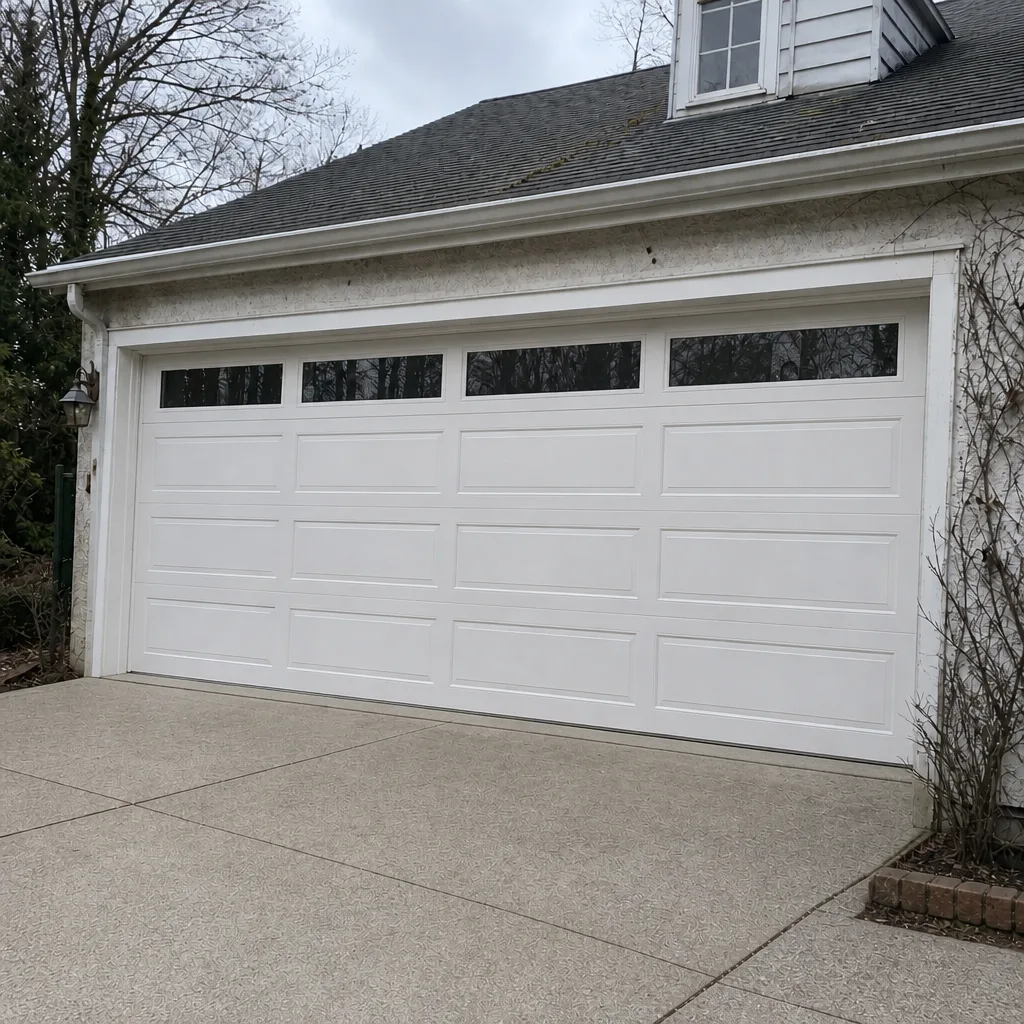
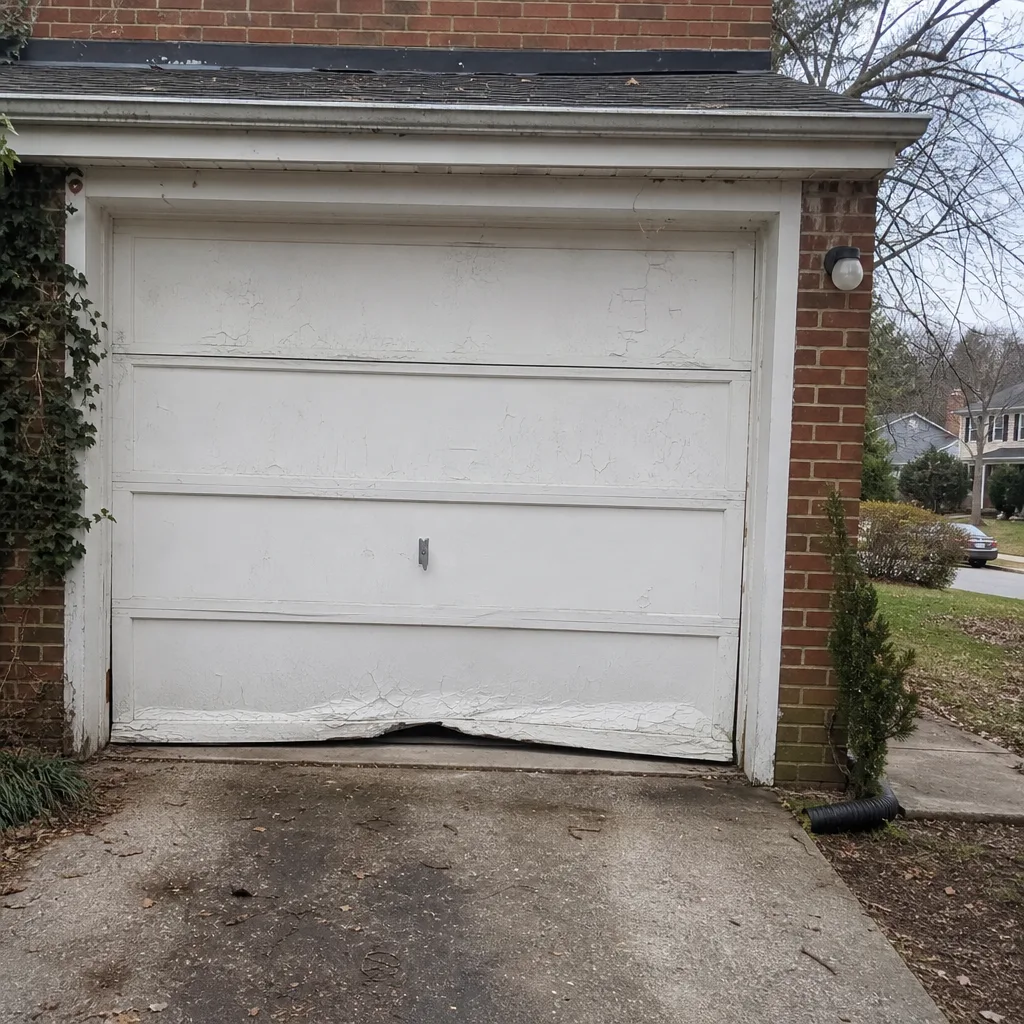
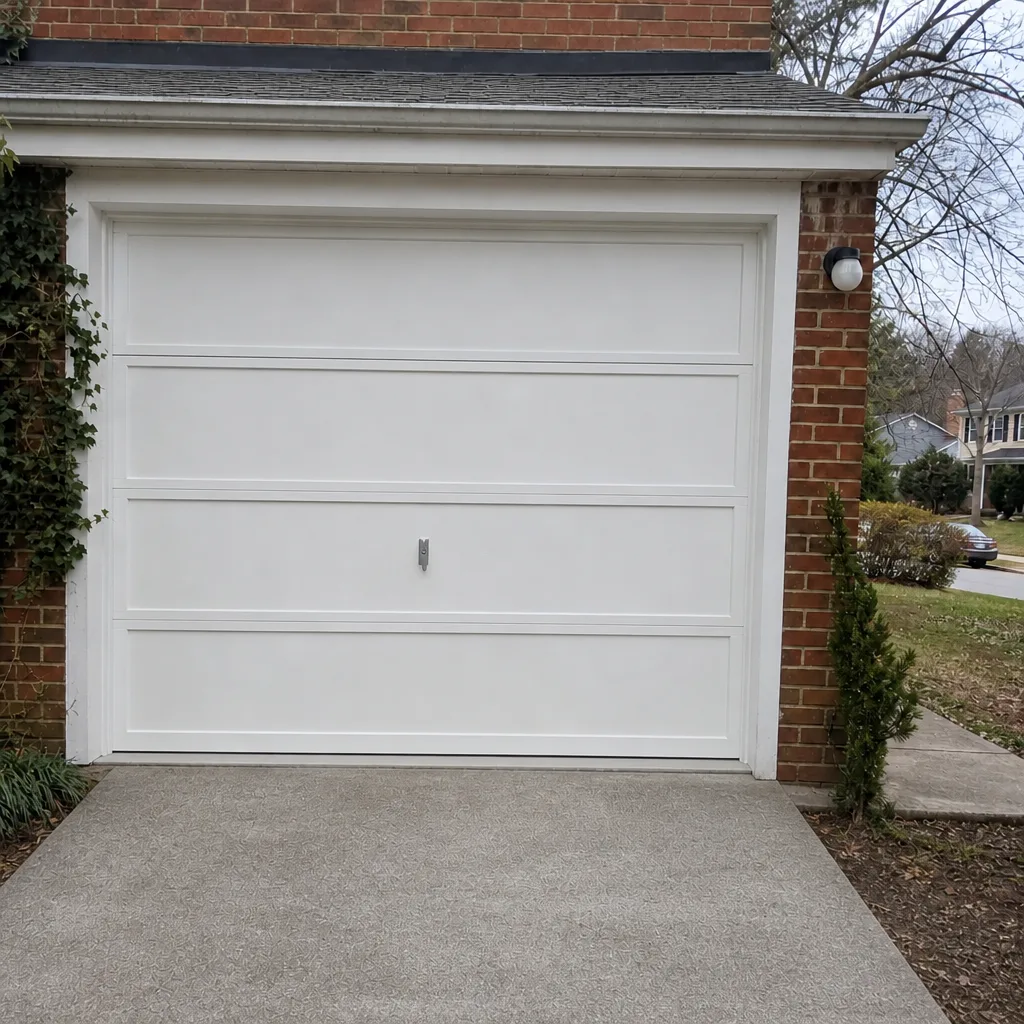
See the difference
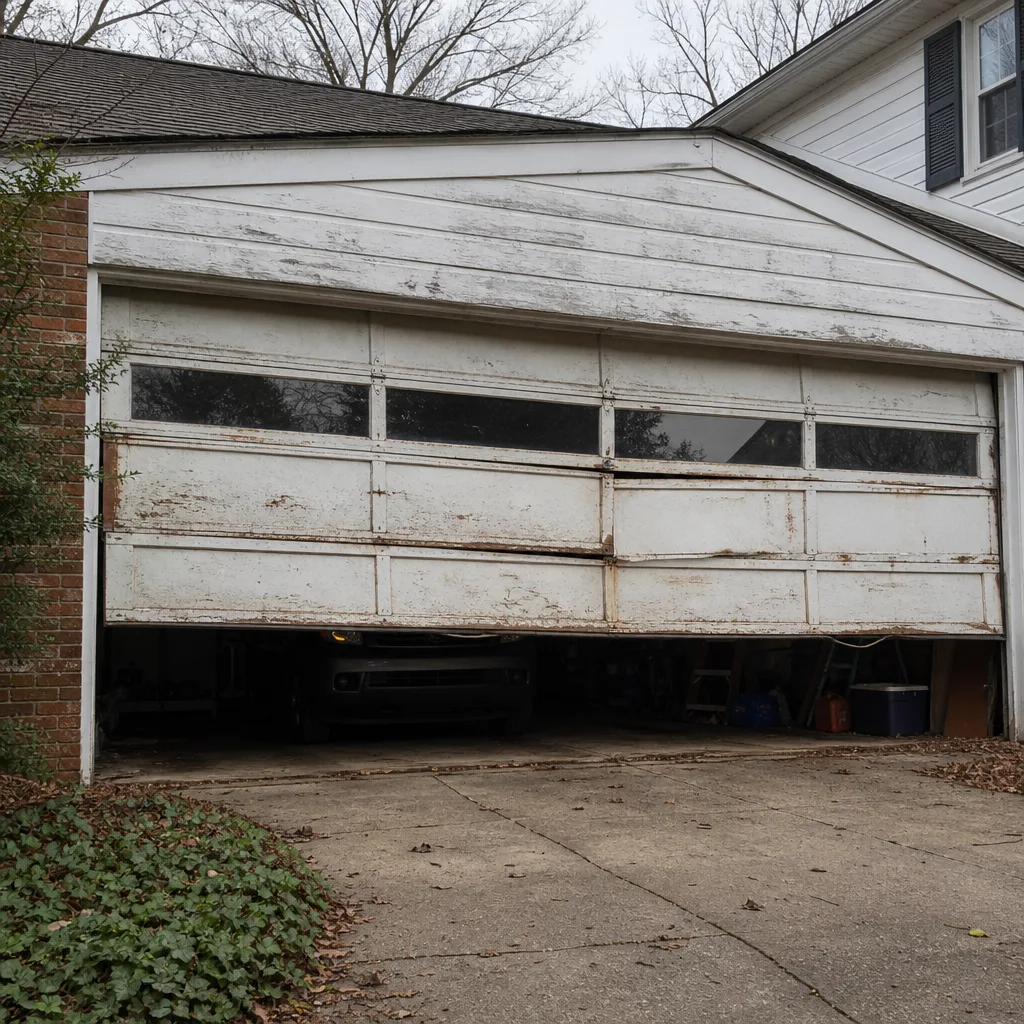 Before
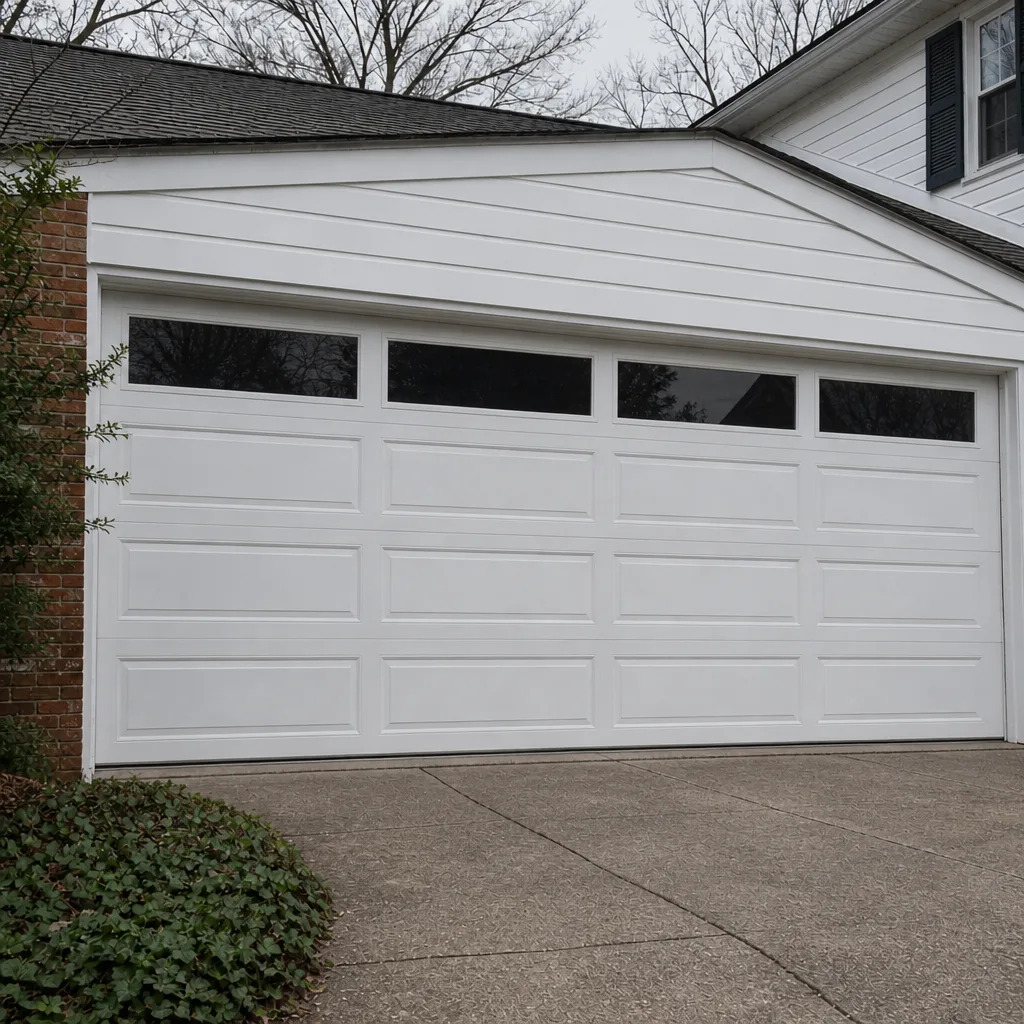 After
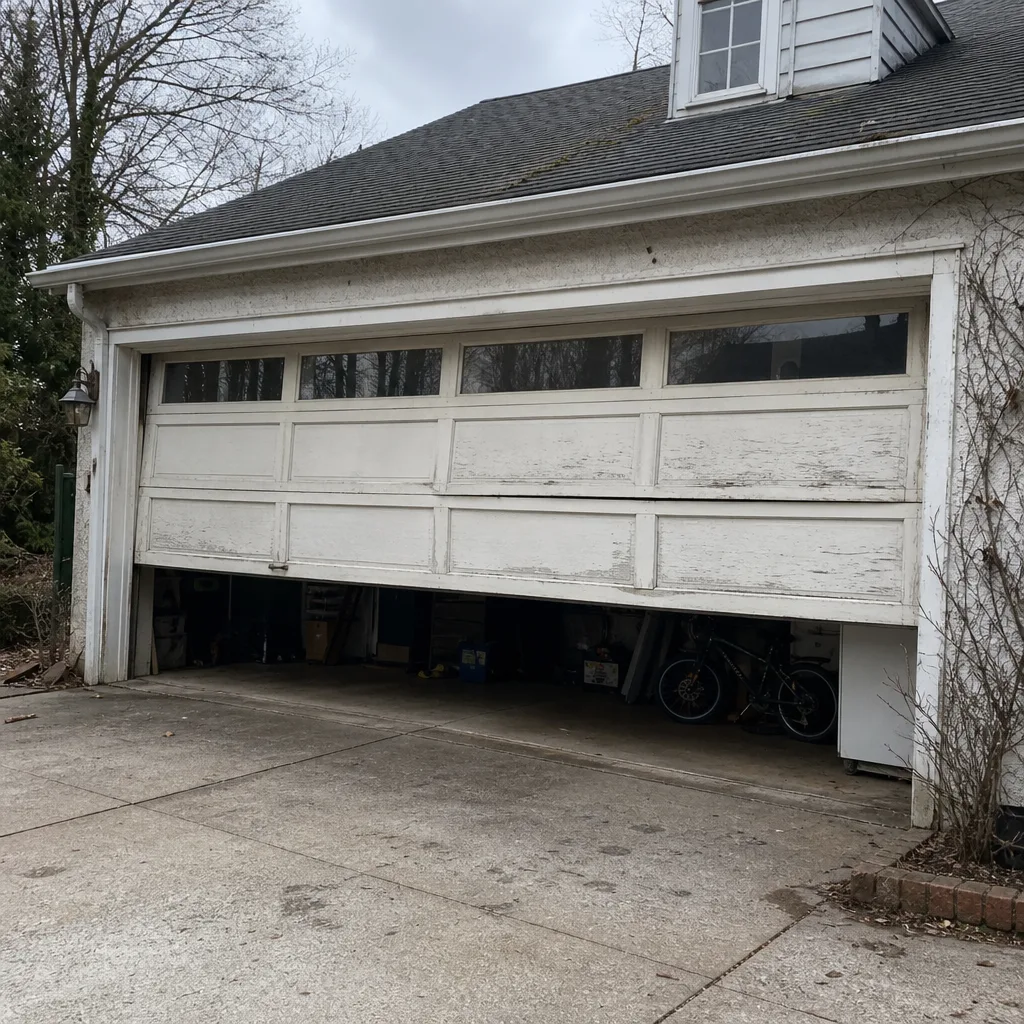 Before
 After
 Before
 After
When to Call a Professional
Some jobs are a judgment call. These aren’t:
- A torsion or extension spring breaks – the door is under tension and the repair involves serious stored energy. Trained technicians only.
- The door comes off its track, hangs unevenly, or won’t close all the way.
- The opener hums but the door doesn’t move, runs and stops, or reverses on its own for no reason.
- The auto-reverse fails to trigger – the safety test every door should pass and none should ignore.
- The cables are frayed, slack, or off the drum.
If the door is stuck and it can’t wait, that’s exactly what emergency service is for. Chevy Chase Garage Door Repair offers free estimates in Chevy Chase – call (855) 684-8076. We answer 24/7. Fast dispatch from 7am to 7pm, Sunday through Friday.
Frequently Asked Questions
Ask which jurisdiction the job falls in – DC or Maryland – and confirm the contractor holds the license for that side of the line. Chevy Chase straddles the boundary, so the right license depends on your address, not the contractor’s marketing. Request proof in writing and get the jurisdiction noted on your quote. Call (855) 684-8076 for a free estimate.
Ask about the spring system (torsion or extension), whether they service your specific opener brand, whether they can source parts for older units, and whether their quote is itemized and in writing. The single best filter is: “Can you repair the existing torsion spring system, or is your business model built on replacing it?” The answer tells you whether you’re hiring a technician or a salesperson. Call (855) 684-8076 to get a specific answer on your door.
A legitimate service call includes a full inspection (springs, cables, drums, rollers, tracks, opener), a plain-language explanation of what’s failing, a written quote before any work starts, the repair itself, and a final balance and safety check. If any of those steps is missing, push back. Pricing is set per job by the written estimate, and the estimate is free.
The written estimate sets the price before work starts. If the technician finds something genuinely different from what was described on the phone, you should hear it before work continues, not after. Vague quotes with line items like “hardware adjustment” are where surprise invoices come from – so demand specifics up front. Call (855) 684-8076 to get a written price on the job.
Yes. We work on Amarr, Wayne Dalton, Craftsman, and Raynor doors and openers, along with the major opener platforms, and we diagnose the existing equipment before recommending replacement. If a contractor deflects when you name your brand, that’s worth taking as a warning. Call (855) 684-8076 and we’ll tell you specifically whether we can work on yours.
Vague line items, spring pricing that doesn’t say one or matched pair, a blanket claim that parts are unavailable for your brand, and safety warnings used as pressure to replace rather than repair. In an area with old doors and mixed brands, the substitute-the-part-and-upsell move is common. An itemized quote is your best protection. Call (855) 684-8076 for a quote with itemized parts and a written price.
The Bottom Line
Hiring a garage door contractor in Chevy Chase is a licensing question and a technical question at once. Get the jurisdiction right, ask component-specific questions before you book, and read the quote line by line. A contractor who can name the spring system on your door, service the brand you already own, and hand you an itemized written price before any work starts is the one to hire. The price should be set before the first screw turns, the diagnosis should come before the recommendation, and “unsafe” should come with specifics. Chevy Chase Garage Door Repair offers free estimates in Chevy Chase – call (855) 684-8076. We answer 24/7. Fast dispatch from 7am to 7pm, Sunday through Friday.
Written by the team at Chevy Chase Garage Door Repair.