
Last updated November 21, 2026
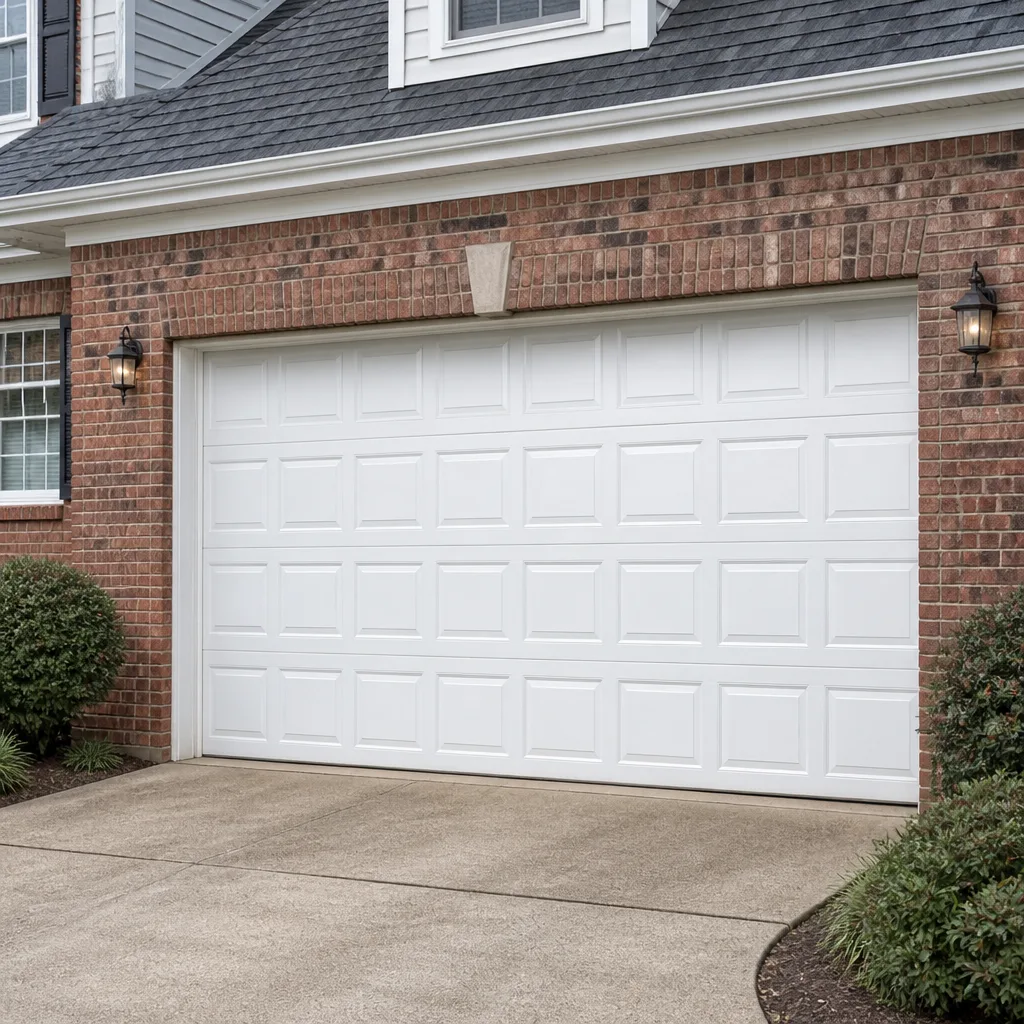 Raised-panel steel
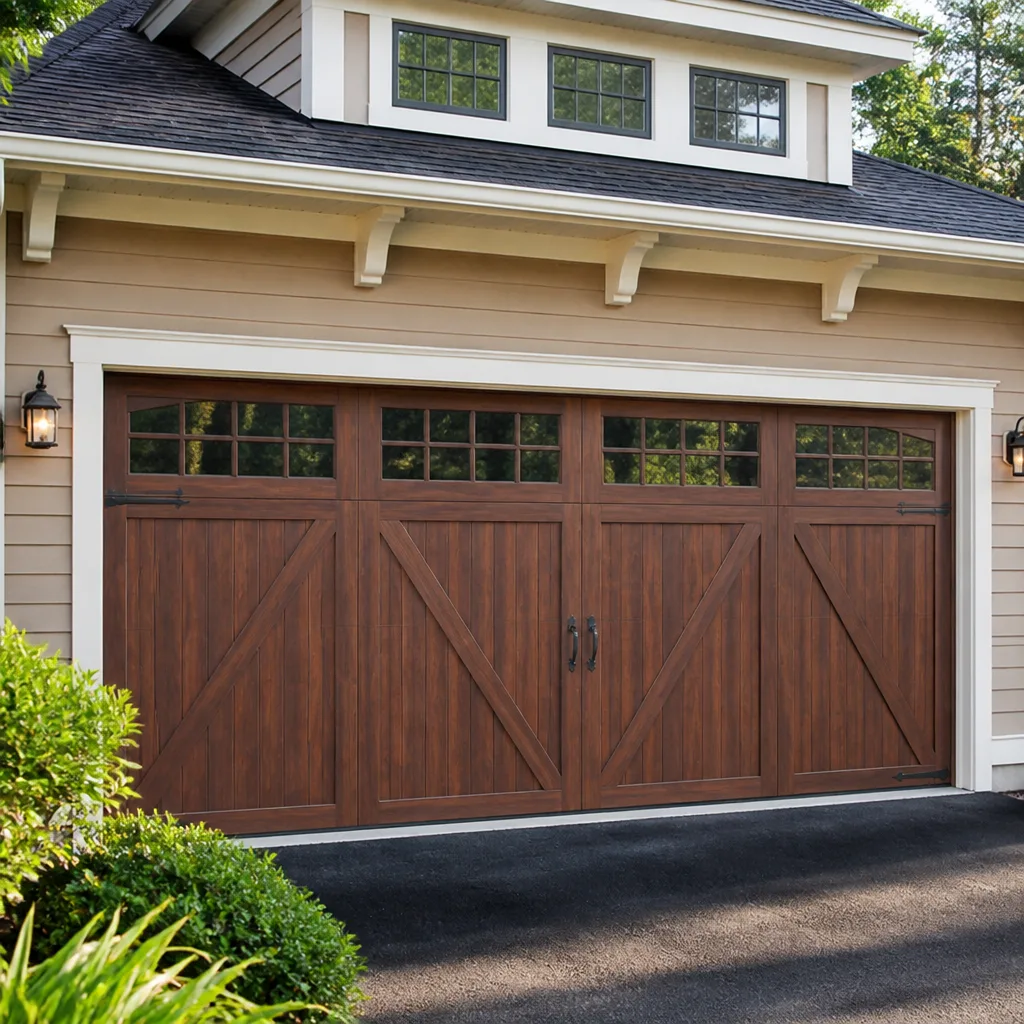 Carriage house
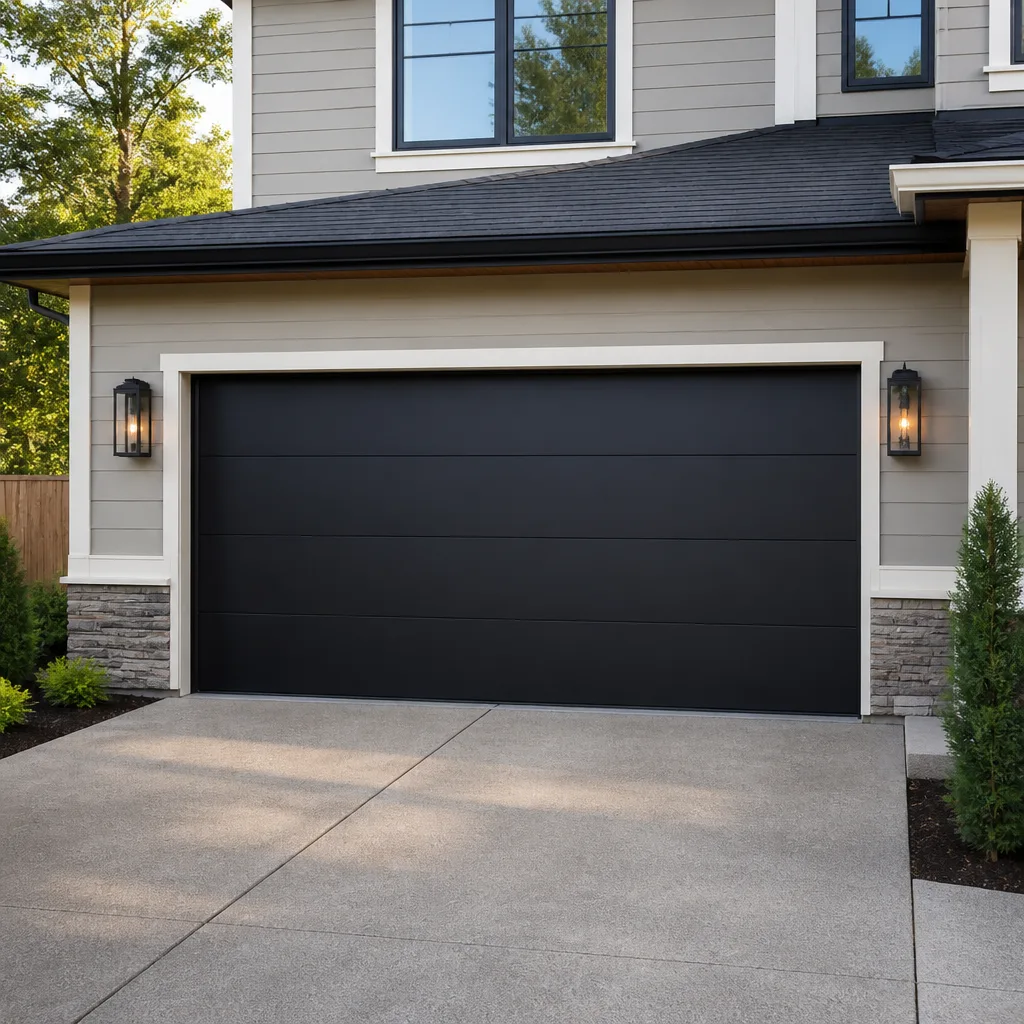 Modern flush
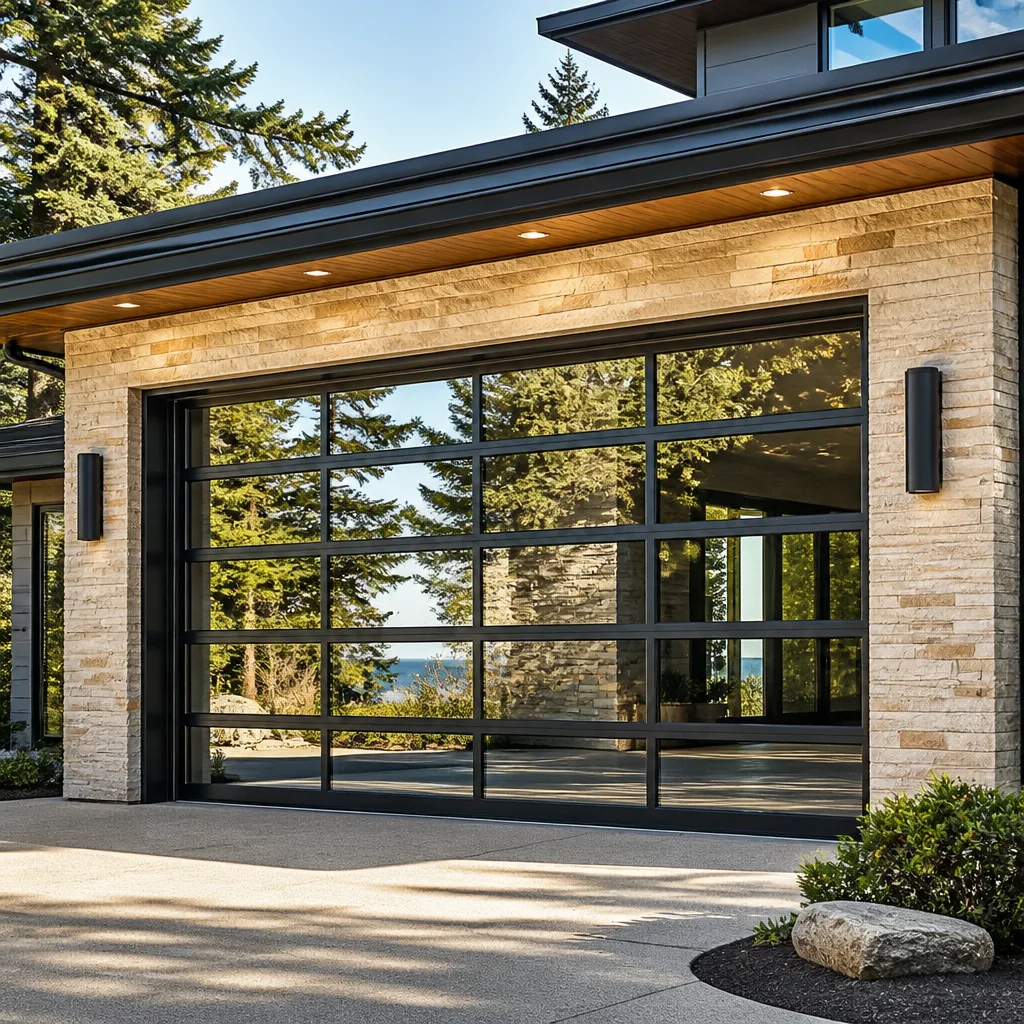 Full-view glass
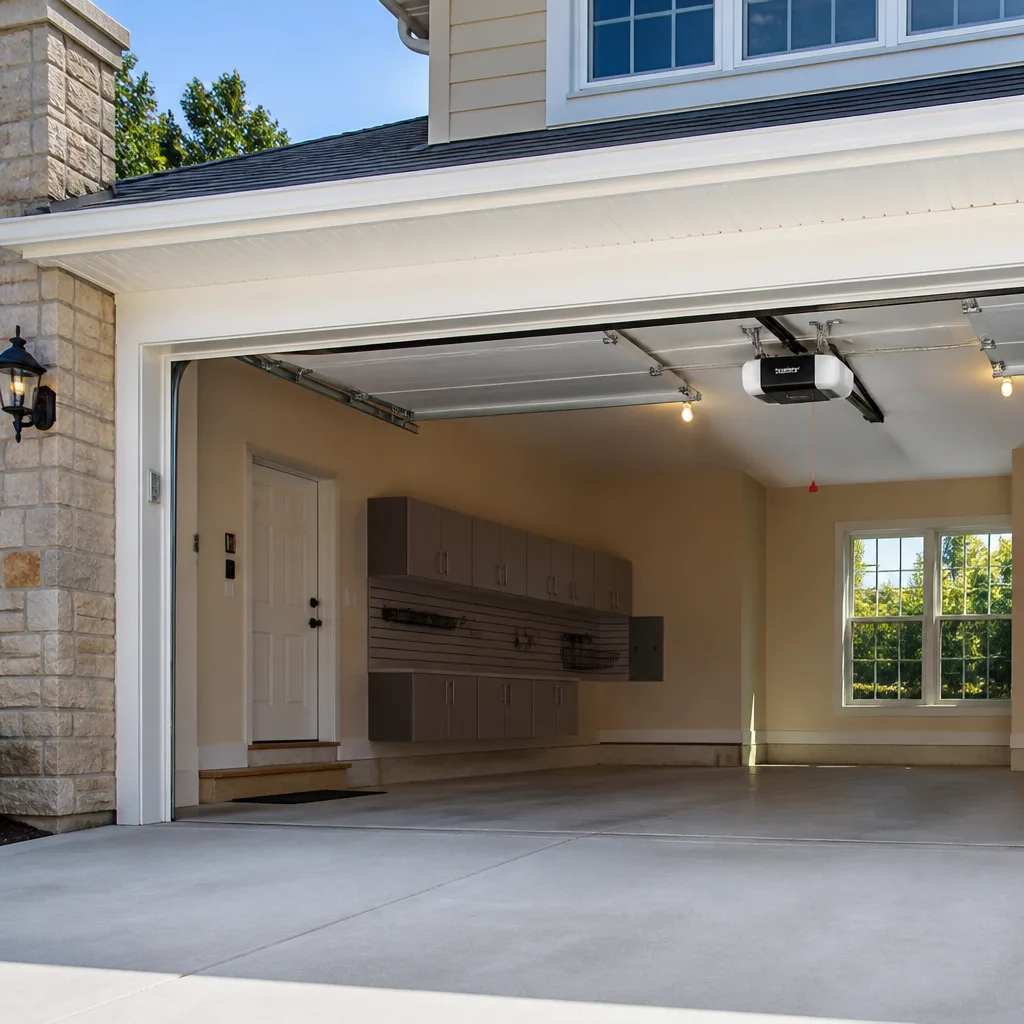 LiftMaster openers
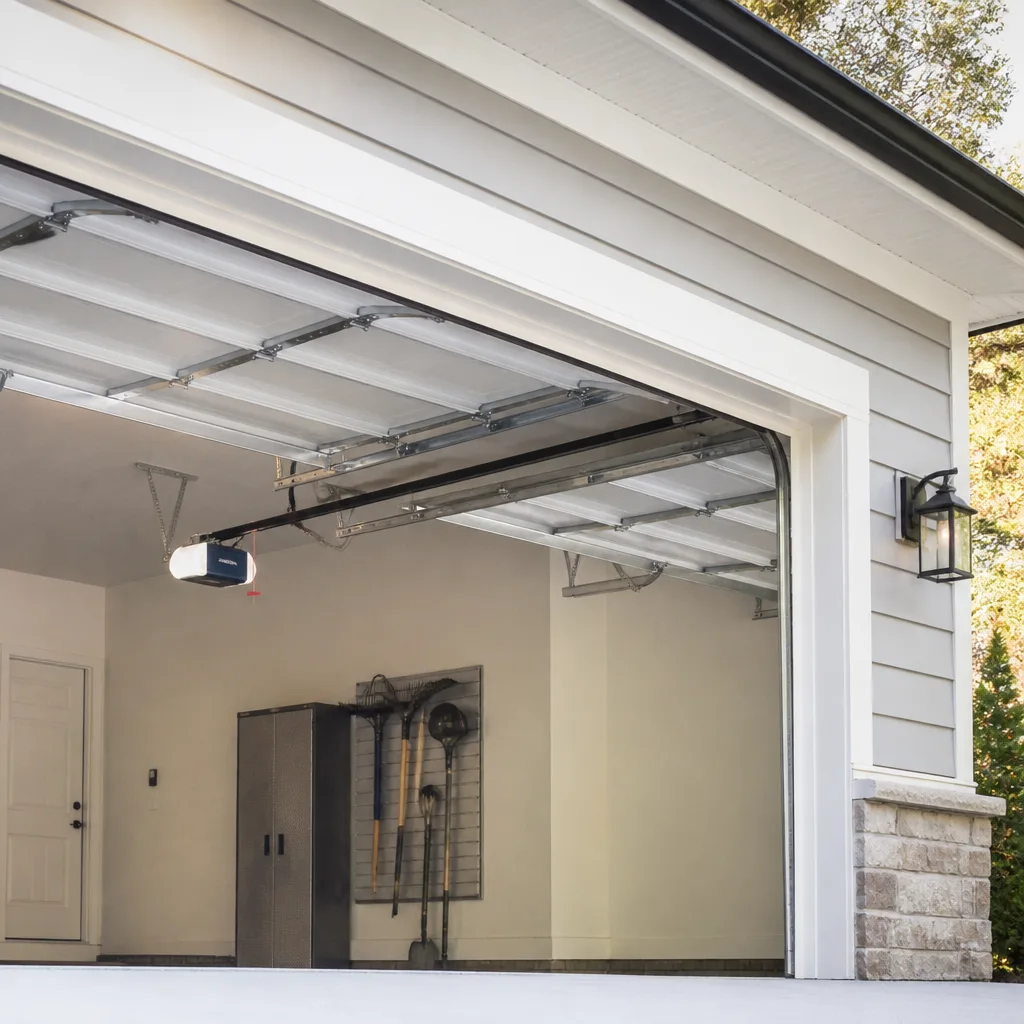 Chamberlain openers
Full 25-point door and opener safety check with every visit - springs, cables, rollers, tracks, and your LiftMaster or Chamberlain opener included
You get a price before we start. It does not change when the pro arrives.
Get your free estimateThe Complete Guide to Garage Doors in Chevy Chase
Most “complete guides” to garage doors are written for a two-car suburban tract home with a fresh rough opening, sixteen feet of clear width, and a foot and a half of headroom above the door. That describes almost none of Chevy Chase. Garages here are frequently one-car, sometimes side-hinged rather than overhead, occasionally recessed into a finished basement level, and almost always tucked under a house that was never designed around a modern garage door. Dimensions and headroom change every recommendation on the list, from spring sizing to opener type to whether a standard panel will fit at all. This guide maps the specific realities of Chevy Chase homes so the decisions you make actually fit the structure you own.
Quick Answer
The right garage door for a Chevy Chase home depends less on style than on three measurements: clear opening width, headroom above the door, and side clearance for the track. Older Chevy Chase homes often need a custom or modified-width door and low-headroom hardware, while newer infill construction can usually take a standard panel. Repair rather than replace whenever the panels and structure are sound and only hardware has failed. For anything involving torsion springs, call a trained professional.
Styles & brands we work with
- Raised-panel steel
- Carriage house
- Modern flush
- Full-view glass
- LiftMaster openers
- Chamberlain openers
Table of Contents
- How Chevy Chase Home Construction Affects Your Garage Door
- Headroom Clearance and Torsion Spring Sizing
- Which Door Materials Hold Up to the DC Humidity-Freeze Cycle
- The Opener Landscape in Chevy Chase: Brand and Longevity
- Custom Width vs. Adapting a Standard Panel
- How to Read Your Door’s Existing Hardware
- Repair or Replace: Making the Economical Call
- Keeping a Chevy Chase Door Working Through the Seasons
- Common Mistakes to Avoid
- When to Call a Professional
- Frequently Asked Questions
How Chevy Chase Home Construction Affects Your Garage Door
Chevy Chase is a neighborhood of layers. Pre-war colonials and Tudors sit alongside 1970s splits and much newer infill, and each era built its garages to a different set of assumptions. That matters because garage door sizing is not universal. A door that fits one house on the block may be two inches too tall for the one next door.
Here’s what we run into most in Chevy Chase:
- Pre-war homes often have a single-car garage with a narrow opening, low ceiling, and a door that was originally built on site rather than ordered from a catalog. Replacement usually means working around the original framing rather than assuming a stock size.
- Recessed and basement-level garages are common where the lot slopes. The door may open into a space with limited headroom because it sits under the main floor structure. That headroom determines whether you can use standard torsion hardware or need a low-clearance setup.
- Side-hinged (carriage-style) doors appear on some older properties. These swing out rather than roll up, so there’s no track or torsion spring at all. They’re a different repair conversation entirely.
- 1970s splits and newer infill tend to have more conventional two-car openings with adequate headroom, which opens the door (literally) to standard panel sizes and modern openers.
The practical takeaway: measure before you shop. Width, height, headroom above the door, and side clearance on both sides of the opening are the four numbers that decide almost everything. If you skip that step, you’ll spend money on a door that doesn’t fit and save nothing.
Headroom Clearance and Torsion Spring Sizing
Headroom is the vertical distance from the top of the door to the lowest obstruction above it. In most standard garages that’s around twelve inches, which comfortably fits standard torsion hardware. In older Chevy Chase garages, headroom is often tighter because the garage was carved out of a basement or built under a low roofline. Tight headroom requires either low-headroom torsion hardware, a different track configuration, or in some cases a rear-mount setup.
Torsion spring sizing is the piece most homeowners never think about, and it’s the piece that matters most. A torsion spring is sized to the exact weight of your door. A door that has been modified, replaced with a heavier panel, or fitted with extra hardware needs a spring matched to the new weight. A spring that’s too light won’t lift the door; one that’s too heavy will put strain on the opener and the door itself.
Why spring work belongs to a technician
Torsion springs are wound under high tension. Releasing that tension without the right tools and training can cause serious injury. We handle spring work with trained technicians for exactly this reason. We don’t walk homeowners through winding or unwinding springs, and no guide should. If your door won’t stay up, feels heavy, or you’ve heard a loud snap, that’s a call-us situation. Our garage door repair team can assess the spring and the rest of the hardware in a single visit.
What headroom affects downstream
- Spring type: standard torsion, low-headroom torsion, or extension springs on very old doors.
- Track layout: standard radius or low-clearance.
- Opener mounting: ceiling-mounted openers need headroom and a solid mounting point; some tight setups push toward a wall-mounted or jackshaft opener.
- Door height: a taller door needs more headroom, so the two constraints compound.
None of these are deal-breakers on their own. They just need to be identified before the door is ordered, not after it arrives.
Which Door Materials Hold Up to the DC Humidity-Freeze Cycle
The DC climate is roughly four seasons of real weather jammed into a year: humid summers, freezing winters, and repeated freeze-thaw cycles in between. That cycle is what ages garage doors here faster than the paint on the rest of the house. Moisture gets into seams and joints, freezes, expands, and works the material loose. The right material choice is about handling that cycle, not about what looks best in a showroom.
Steel
Steel is the most common choice in Chevy Chase and for good reason. It’s strong, it holds paint well, and it handles humidity without warping. The weak point is the bottom edge, where moisture sits longest. Steel doors with a good bottom seal and a bit of maintenance outlast most other options. If you want a door that needs the least attention through a DC winter, this is it.
Wood composite
Wood composite gives you the look of a wood door without the maintenance of real wood, and it’s popular on older Chevy Chase homes where a period-appropriate appearance matters. Quality composite handles moisture far better than solid wood, which can swell and crack through repeated freeze-thaw. Solid wood doors look beautiful, but they need regular sealing to survive here, and once water gets behind the finish, the repair gets expensive.
Aluminum
Aluminum is light and rust-resistant, which sounds ideal for a humid climate. The catch is that aluminum is also lighter and less rigid, so it dents more easily and offers less insulation. It works well on smaller single-car doors and on homes where weight matters because headroom or structure is limited. On a larger Chevy Chase door, it can feel flimsy compared to steel of similar thickness.
How to decide
- Want low maintenance through DC winters: steel.
- Need a period look on an older home: wood composite, with care.
- Have a tight structure where weight is a constraint: aluminum in a small size.
- Care more about insulation than anything else: an insulated steel door.
Whichever you choose, the finish and the bottom seal do most of the work protecting it from the local climate. A well-sealed steel door in Chevy Chase will outlast a poorly sealed wood one every time.
The Opener Landscape in Chevy Chase: Brand and Longevity
The opener you’ll find above a Chevy Chase door is usually one of a handful of brands, and the honest longevity comparison matters more than any spec sheet. We work on the opener you already own across LiftMaster, Chamberlain, Genie, and Craftsman platforms, and in our experience the brand tells you less about lifespan than three things: how the opener is mounted, whether the door is balanced, and how it’s used day to day.
Chain, belt, and screw drive
Chain-drive openers are the loudest and the most durable workhorses. Belt-drive openers are quieter, which matters if the garage sits under a bedroom, and they’ve become the default for most new installs. Screw-drive openers are less common but have their fans for lower-maintenance operation.
What actually affects longevity
- Door balance. An opener that has to fight an unbalanced door ages fast. A door that lifts with two fingers lets the opener do almost nothing.
- Mounting. A ceiling-mounted opener on a solid, correct bracket lasts longer than one hung hastily from whatever was nearby.
- Usage. An opener run a dozen times a day will wear sooner than one run twice, regardless of brand.
- Smart features. Wi-Fi-enabled LiftMaster and Chamberlain units add convenience but add electronics that can fail. The mechanical core is what needs to last.
Repair before replace
The most common opener failure we see is a motor that’s fine and a part that isn’t: a stripped gear, a failed logic board, a bad safety sensor, or a remote that’s simply stopped pairing. Those are repair jobs, not replacement jobs, and we tell you which it is before recommending anything. We prioritize garage door opener repair across all the major platforms because a repaired opener is usually the cheaper and correct answer.
If the opener is genuinely at the end of its life, a new one needs to match your door’s weight and your garage’s headroom. That’s a conversation, not a guess.
Custom Width vs. Adapting a Standard Panel
A standard residential door comes in a limited set of widths, most commonly eight, nine, and sixteen feet. Many Chevy Chase garages don’t fit neatly into those sizes, especially the single-car garages on pre-war homes. So the question becomes: order a custom-width door, or adapt a standard panel to a non-standard opening?
When a standard panel can be adapted
A standard door can usually be made to work when the opening is close to a standard size. Small differences can often be handled with trim, a slightly different track, or a different door height. If the opening is within a couple of inches of a standard width and headroom is adequate, adapting a standard panel is often the cheaper, faster path, and there’s no downside to the door’s operation.
When custom width is the right call
Custom width usually makes sense when the opening is significantly off-standard, when the existing framing won’t accommodate a standard track and spring setup, or when the home’s appearance depends on a door that matches the original opening exactly. Older Chevy Chase homes with narrow single-car openings are the clearest case. A custom door costs more and takes longer to arrive, but a standard door forced into an opening it doesn’t fit is a permanent source of problems.
How to decide, in order
- Measure the clear opening width at its narrowest point, not the widest.
- Measure headroom and side clearance.
- Compare those to standard sizes.
- If you’re within a couple of inches, ask whether trim and track adjustment can close the gap.
- If you’re well outside standard sizes, or the framing is irregular, plan for custom.
Chevy Chase homeowners can save a meaningful amount by adapting when possible. The key is getting the measurement right before committing to either path. That’s also why a proper measure comes before a price: the written estimate should be based on the actual opening, not an assumption. If you’re weighing a new door overall, our page on garage door installation walks through what to expect from the process.
How to Read Your Door’s Existing Hardware
Before you replace anything, it’s worth understanding what you already have. The hardware on a garage door tells you a lot about its age, its type, and whether a targeted repair is realistic or a full replacement is the smarter spend. You don’t need to take anything apart to read it. You just need to know what you’re looking at.
What to look for
- Torsion or extension springs. A torsion spring runs horizontally above the door; extension springs run along the tracks on either side. Torsion is the modern standard; extension springs on a very old door are a sign the whole setup may be due for a review.
- Panel material and construction. Steel and composite panels with a solid core are more repairable than hollow or heavily damaged ones.
- Track condition. Straight, solid tracks are fine. Bent, rusted, or misaligned tracks often mean the door has taken a hit or the mounting has shifted.
- Rollers and hinges. Worn rollers and hinges are cheap to replace and a common source of noise and sticking.
- The opener’s brand and age. If the opener is a Craftsman or Genie unit that’s clearly older than the door, that’s normal. What matters is whether it’s working correctly with the door’s current weight.
- Bottom seal. A cracked or missing bottom seal lets moisture into the door’s bottom edge, which is a slow, expensive problem in this climate.
What the hardware tells you
If the panels are solid and the springs, tracks, and rollers are the only worn parts, targeted repair is almost always the economical path. If the panels are cracked, the tracks are bent beyond realignment, or the door has been patched repeatedly, replacement usually wins. Reading the door honestly, rather than deciding in advance what you want, is the difference between a repair that lasts and a replacement you didn’t need.
Repair or Replace: Making the Economical Call
The economical answer is almost always repair when the door’s structure and panels are sound and the failure is in the hardware. A broken spring, a dead opener, a worn roller, a misaligned track: these are repairs, and they cost far less than a new door. Replacement earns its keep when the door’s body is the problem, not the parts bolted to it.
Repair usually wins when
- The panels are intact and the finish is holding.
- The problem is a spring, opener, roller, hinge, or sensor.
- The door is balanced and the tracks are straight.
- You’re happy with the door’s appearance and size.
Replacement usually wins when
- Panels are cracked, dented beyond repair, or water-damaged.
- Tracks are bent beyond realignment.
- The door has been repeatedly patched.
- The door doesn’t fit the opening energy or function-wise, and you’re going to fix it properly once.
The cost of getting it wrong
Replacing a door whose only fault is a worn spring is money spent for no gain. Repairing a door whose panels are failing is money spent twice. The honest call comes from an inspection, and we’d rather tell you “this one’s a repair” than sell you a door you don’t need. That’s the repair-first approach we take across all the brands we service, including Genie, Clopay, Amarr, and Wayne Dalton. When a door really is at the end of its life, we’ll say so and explain why.
For a broken spring specifically, we handle the replacement with trained technicians, and we don’t recommend homeowners attempt it. A spring under tension can cause real injury. That’s a job for someone with the tools and experience.
Keeping a Chevy Chase Door Working Through the Seasons
A garage door that’s maintained well lasts noticeably longer than one that isn’t, and in Chevy Chase the seasonal swings make that difference bigger. Cold snaps stiffen lubricant and put load on springs. Humid summers work on seals and finishes. A few simple habits, none of them risky, make the door’s hardware and finish last much longer.
What you can safely do yourself
- Lubricate the moving parts. Rollers, hinges, and the opener’s chain or belt benefit from periodic lubrication. Use the manufacturer’s recommended product, not whatever’s in the garage.
- Watch the door’s motion. If it jerks, grinds, or stops mid-travel, note it and call. It’s usually cheaper to fix early.
- Test the safety reverse. Most openers have a photo-eye and a force-reverse feature. If the door doesn’t reverse when it should, that’s a safety issue worth a call.
- Keep the bottom seal and finish intact. Touch up paint before moisture gets behind it. Replace a cracked bottom seal at the first sign of wear.
- Keep the tracks clear. Debris in the tracks can cause the door to bind and the opener to struggle.
What to leave to a technician
Anything involving the torsion spring, the cables, or the opener’s internal components belongs to someone with training. Those are the parts where a mistake can cause serious injury, and where “I’ll try it myself” gets expensive fast. We’re happy to check the spring and cables as part of a service call.
Common Mistakes to Avoid
- Shopping before measuring. Ordering a door before you’ve measured the clear opening, headroom, and side clearance is the most common and most expensive mistake in Chevy Chase, because so many garages are non-standard. Measure first.
- Assuming a stock size will fit. The narrow single-car openings on older Chevy Chase homes often can’t take a standard panel without modification. Confirm the fit before you commit.
- Trying torsion spring work yourself. Torsion springs are under high tension. Without the right tools and training, an attempt can cause serious injury. Leave it to a trained technician.
- Choosing a door for looks alone. In the DC humidity-freeze cycle, finish and seal matter as much as appearance. A beautiful door that isn’t sealed will fail sooner than a plain one that is.
- Replacing an opener that just needed a part. Many “dead” openers need a gear, a board, or a sensor, not replacement. Get a diagnosis before a new unit.
- Ignoring a bottom seal. In this climate, a cracked bottom seal lets moisture into the door’s bottom edge, which is where freeze-thaw damage starts. Replace it early.
- Putting off a door that’s out of balance. An unbalanced door strains the opener and wears the hardware. A simple adjustment early avoids a bigger repair later.
When to Call a Professional
Some garage door problems are wait-and-see. Others aren’t. Call a professional when a torsion spring breaks, when the door won’t stay up or comes down hard, when the opener won’t move the door, when the safety reverse doesn’t work, or when you see a bent track or a cable that’s frayed. Any of those is a same-day call, not a tomorrow problem, and none of them should be a do-it-yourself project given the injury risk. Chevy Chase Garage Door Repair offers free estimates in Chevy Chase. We work on the brand you already have, and we’ll tell you honestly whether you’re looking at a repair or a replacement. Call (855) 684-8076. We answer 24/7. Fast dispatch from 7am to 7pm, Sunday through Friday.
Frequently Asked Questions
It depends on your opening. Chevy Chase garages are often narrower or lower than standard, especially on pre-war homes, so a custom or modified-width door is sometimes the right call. Measure the clear opening at its narrowest point and the headroom above the door; if you’re within a couple of inches of a standard size, a standard panel can usually be adapted. If you’re well outside it, plan for custom. Call (855) 684-8076 for a free measure and exact quote.
Steel is generally the lowest-maintenance choice for the DC humidity-freeze cycle, as long as the finish and bottom seal are kept intact. Wood composite gives a period look on older Chevy Chase homes but needs more attention, and aluminum is light and rust-resistant but dents more easily on large doors. The finish and seal do most of the protective work whichever material you pick. Call (855) 684-8076 to talk through what suits your door and structure.
Repair is usually the right call when the panels are intact and the problem is hardware like a spring, opener, roller, or track. Replacement makes sense when the panels themselves are cracked, water-damaged, or beyond repair, or the tracks are bent past realignment. Read the door’s hardware honestly rather than deciding in advance. Call (855) 684-8076 and we’ll tell you which path we’d take.
Yes, and we try to. Most opener failures are a failed part, not a dead unit, and we prioritize diagnostics across LiftMaster, Chamberlain, Genie, and Craftsman platforms before ever recommending replacement. We’ll tell you what’s failed and whether it’s worth repairing. Call (855) 684-8076 for a free estimate.
No. Torsion springs are wound under high tension, and releasing that tension without the right tools and training can cause serious injury. We perform spring work with trained technicians for exactly this reason. If your spring has broken or the door feels heavy, call (855) 684-8076 and we’ll handle it safely.
Belt-drive openers are the quietest and best if your garage sits near a bedroom, chain-drive units are the most durable workhorses and the loudest, and screw-drive openers fall somewhere between. The brand is less important than the door being balanced and the opener being correctly mounted. We work on whichever platform you already have. Call (855) 684-8076 to book a free estimate.
The Bottom Line
A Chevy Chase garage door decision starts with three measurements: clear opening width, headroom, and side clearance. Get those right and the rest of the decision, materials, opener, standard versus custom, becomes straightforward. Repair beats replacement whenever the door’s body is sound and only the hardware has failed. When it comes to springs and internal opener parts, a trained technician is the right person for the job, not a homeowner with a toolbox. Know what you own, measure before you shop, and you’ll avoid the most expensive mistakes this guide covers. For help with any of it, Chevy Chase Garage Door Repair is here. Call (855) 684-8076 for a free estimate.
Written by the team at Chevy Chase Garage Door Repair.
See the difference
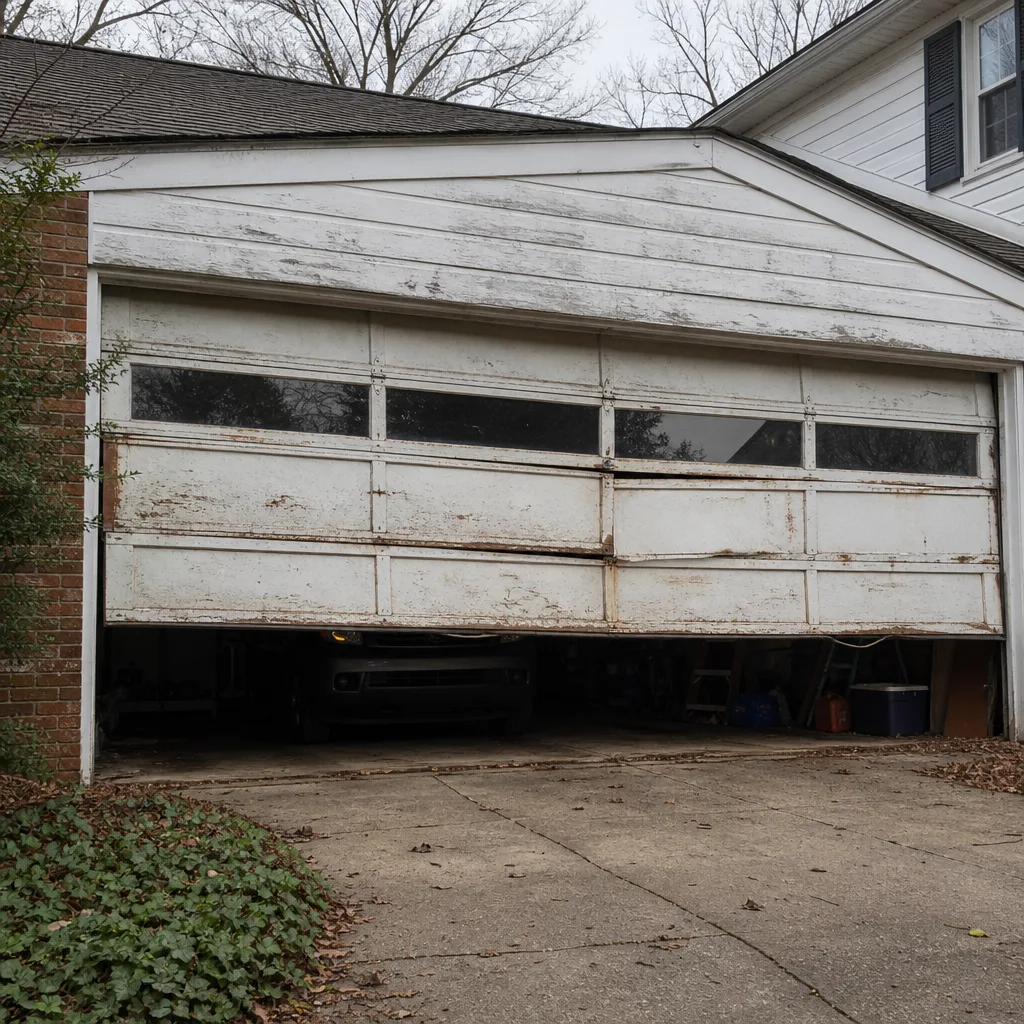 Before
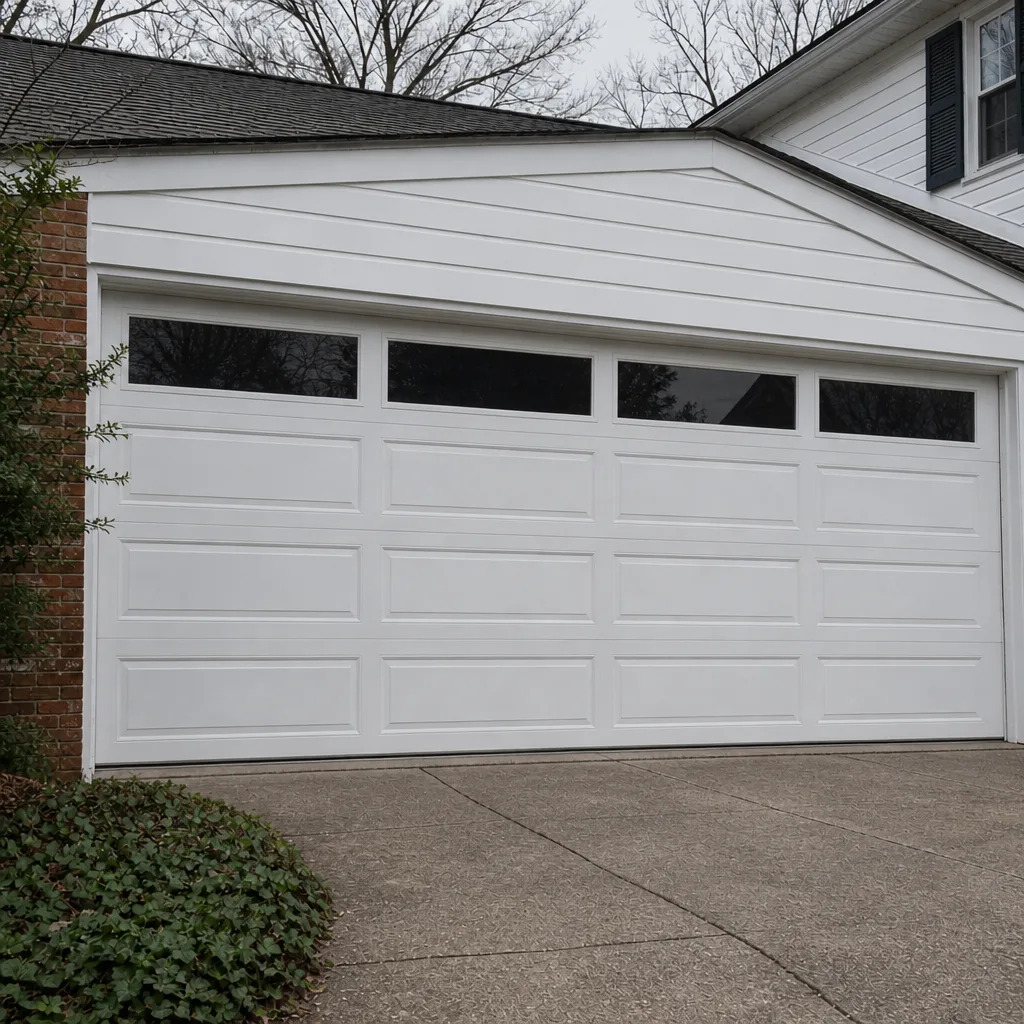 After
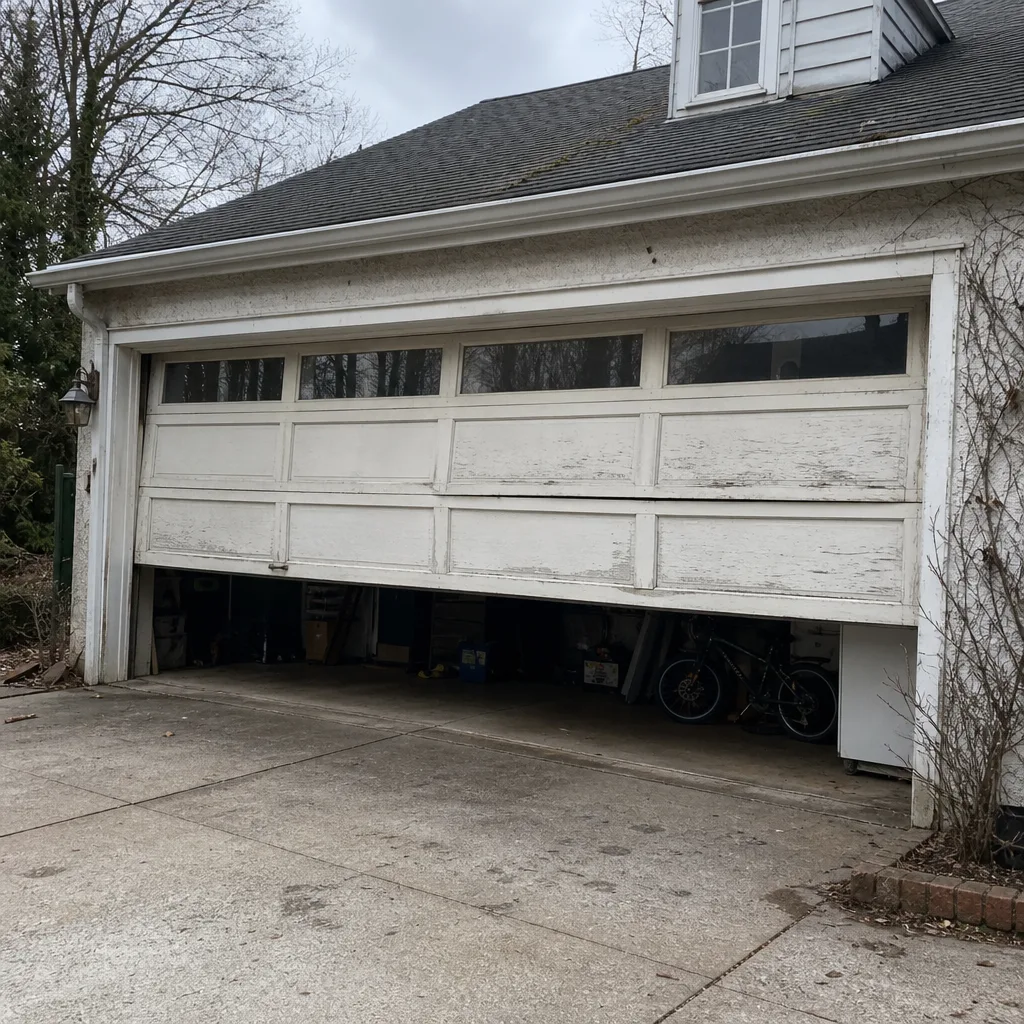 Before
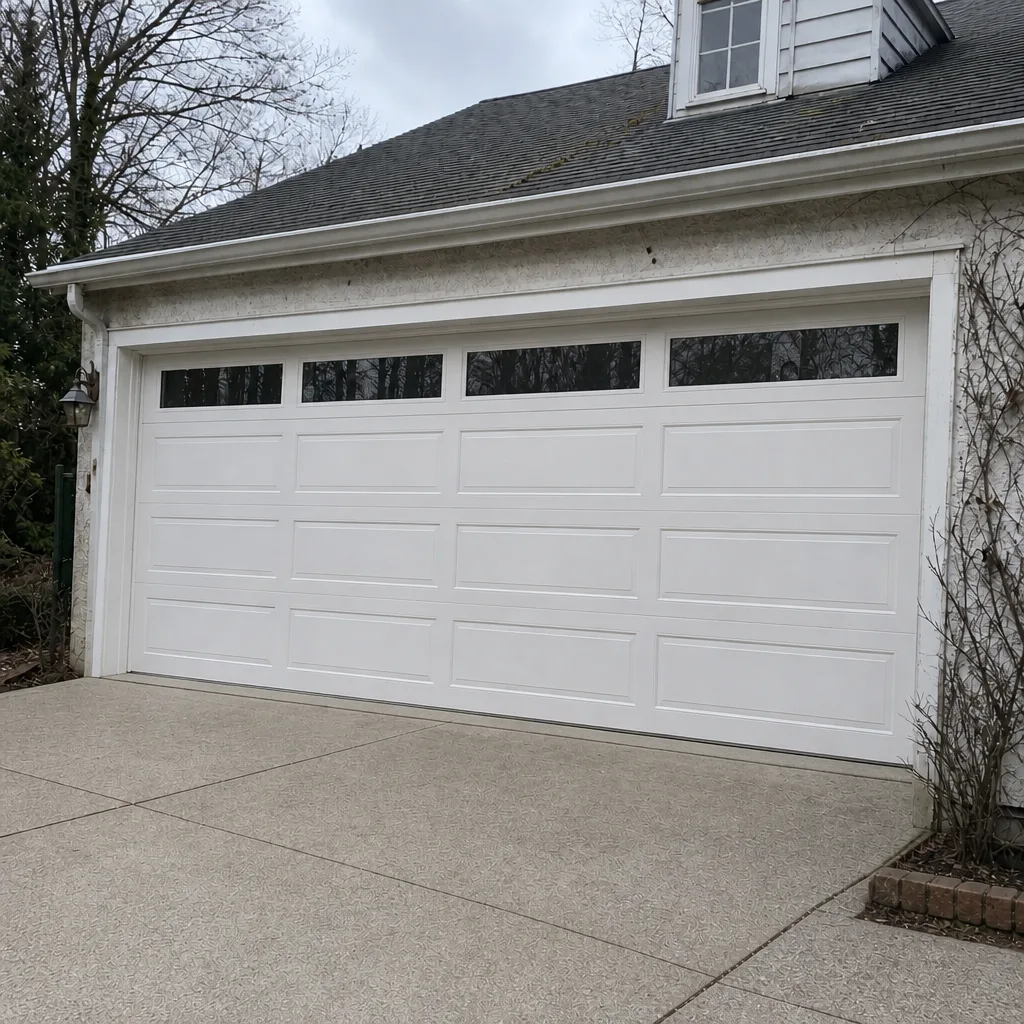 After
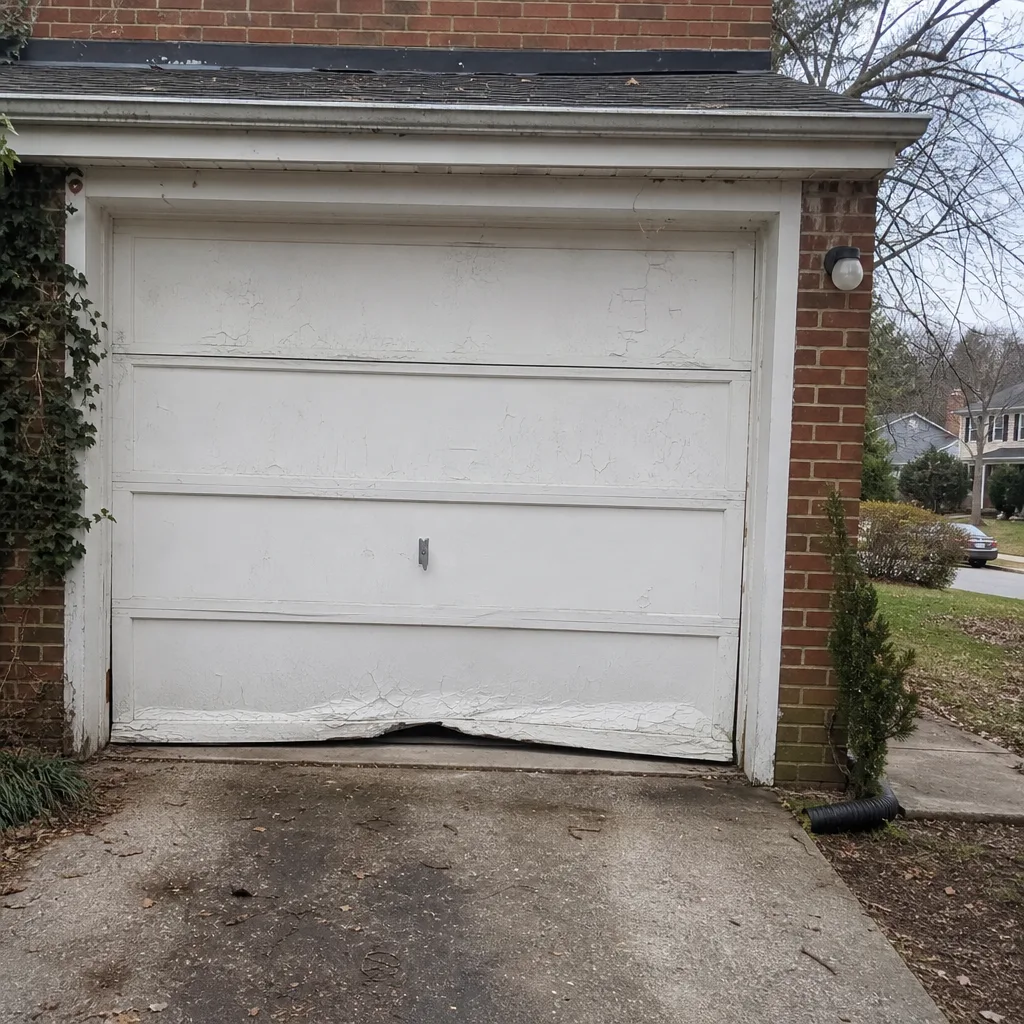 Before
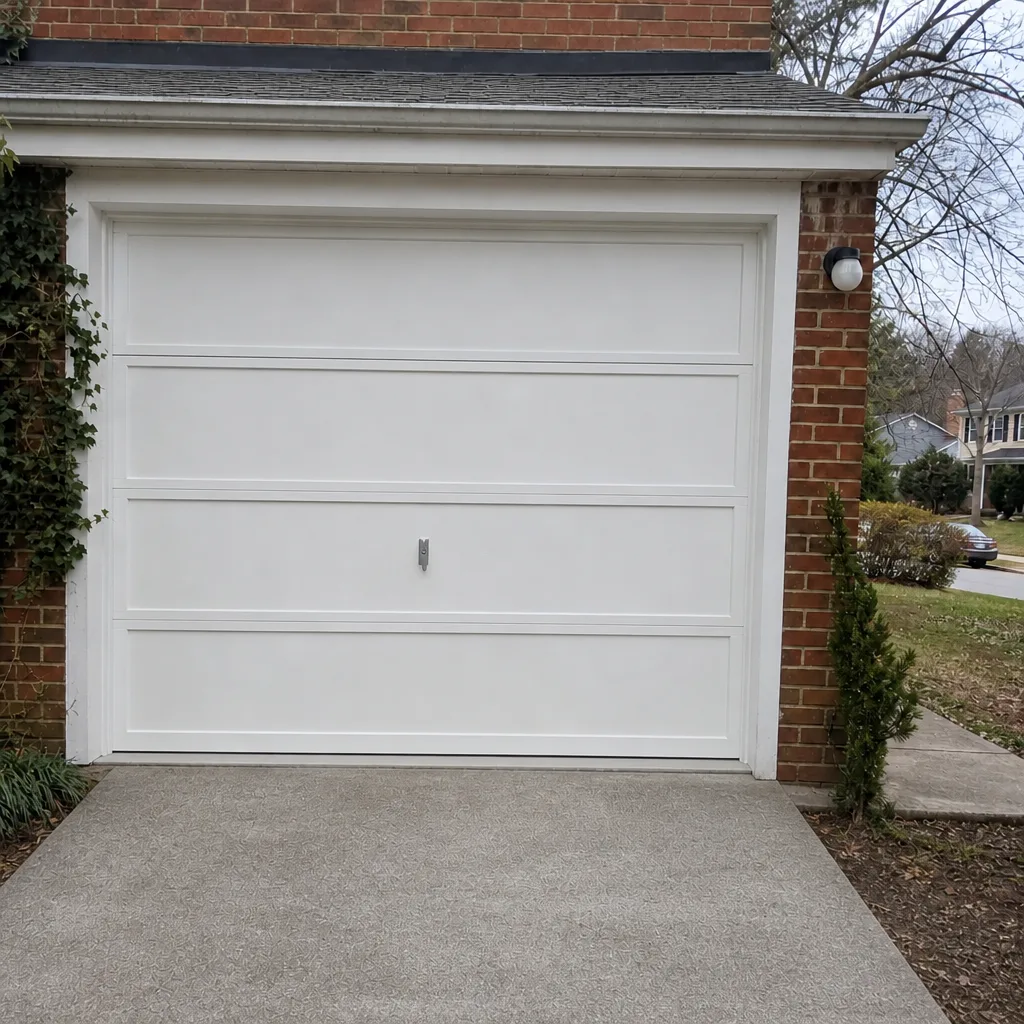 After