
Last updated November 21, 2026
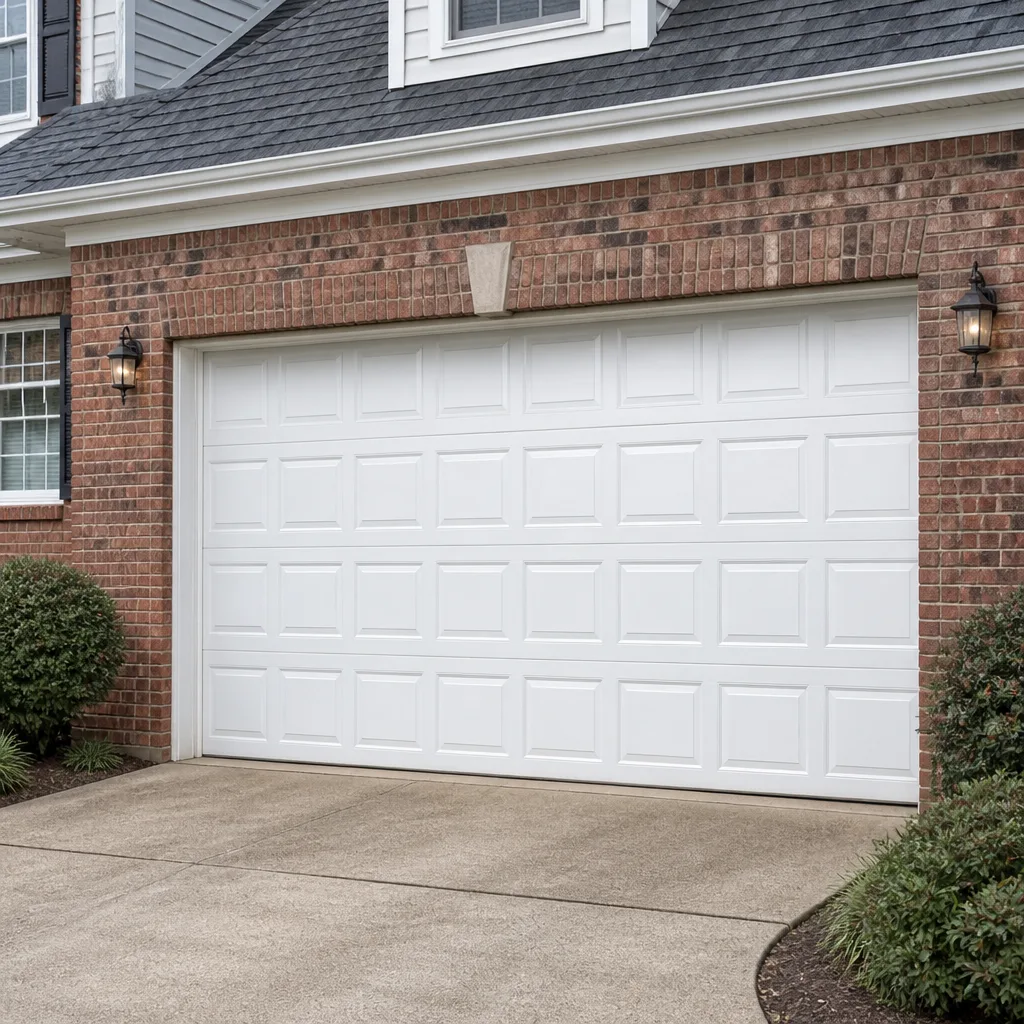 Raised-panel steel
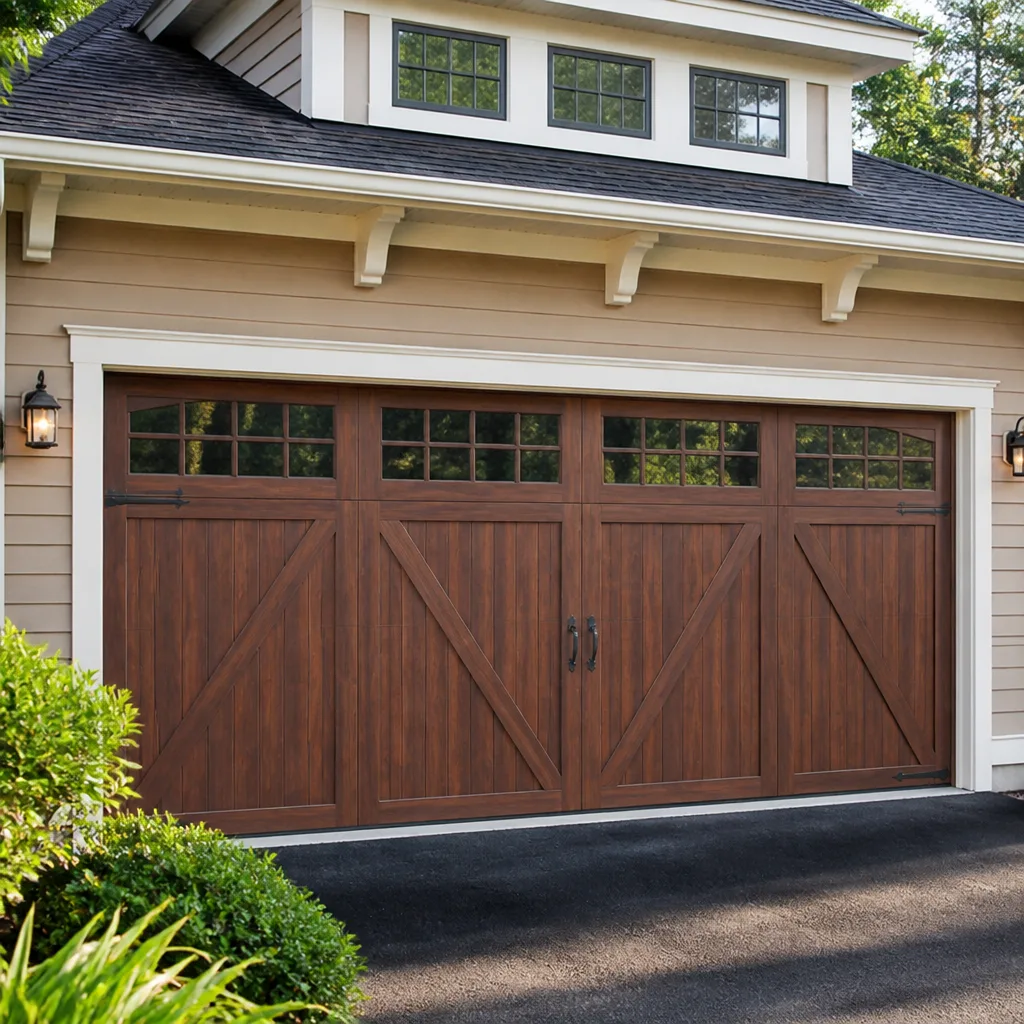 Carriage house
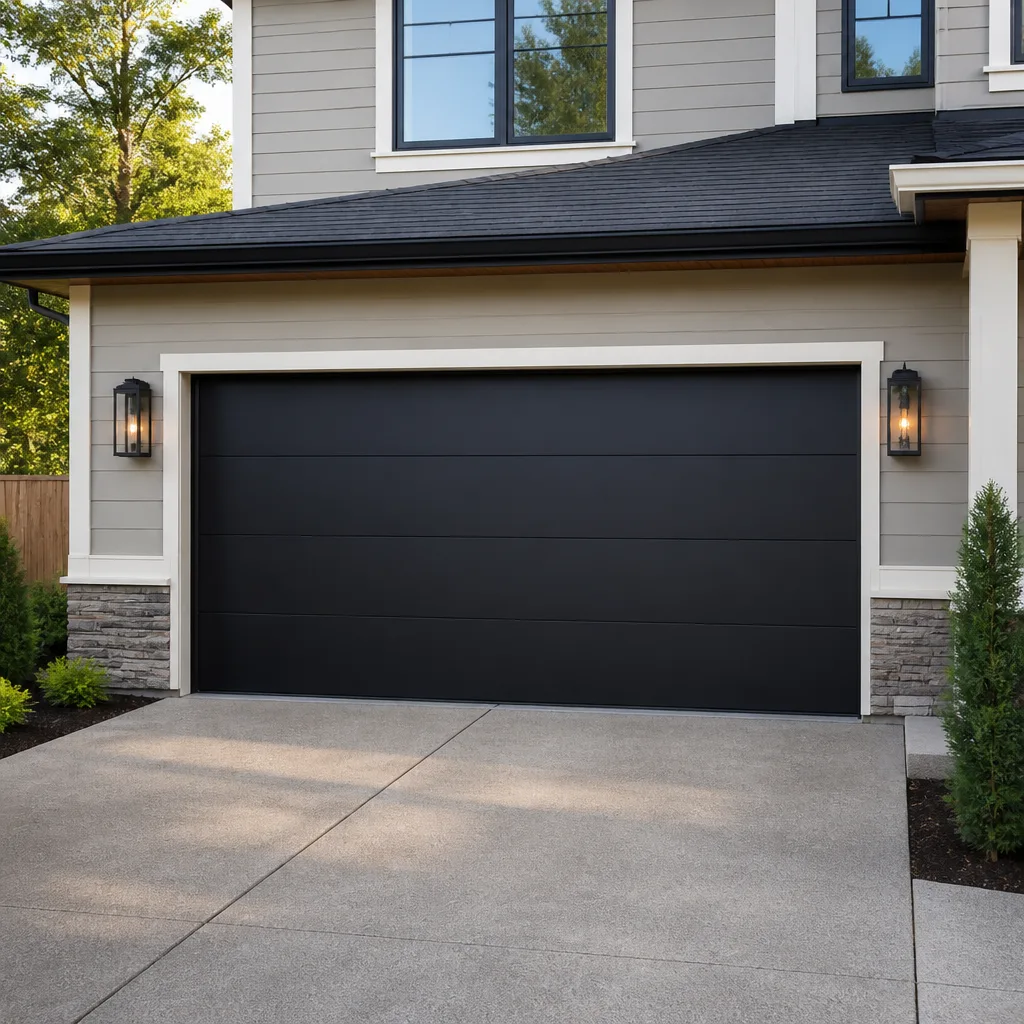 Modern flush
 Full-view glass
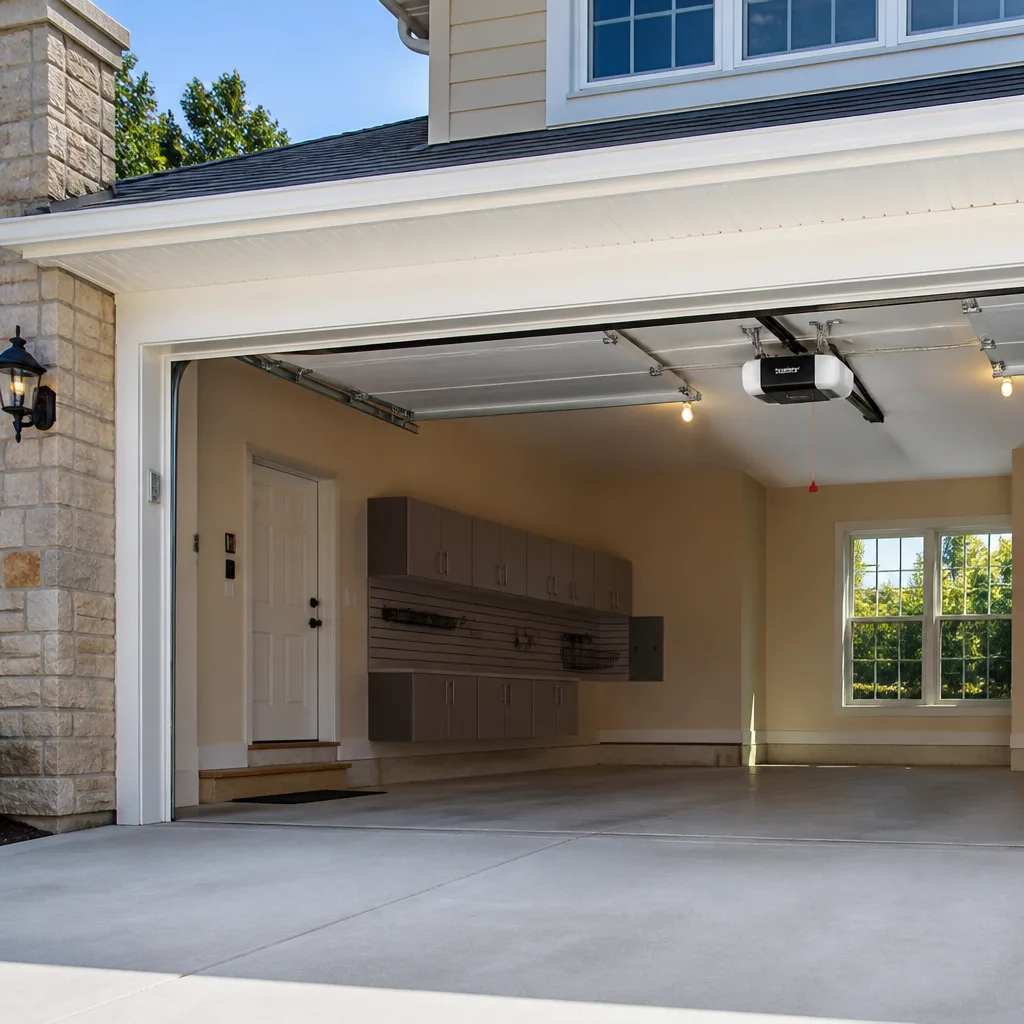 LiftMaster openers
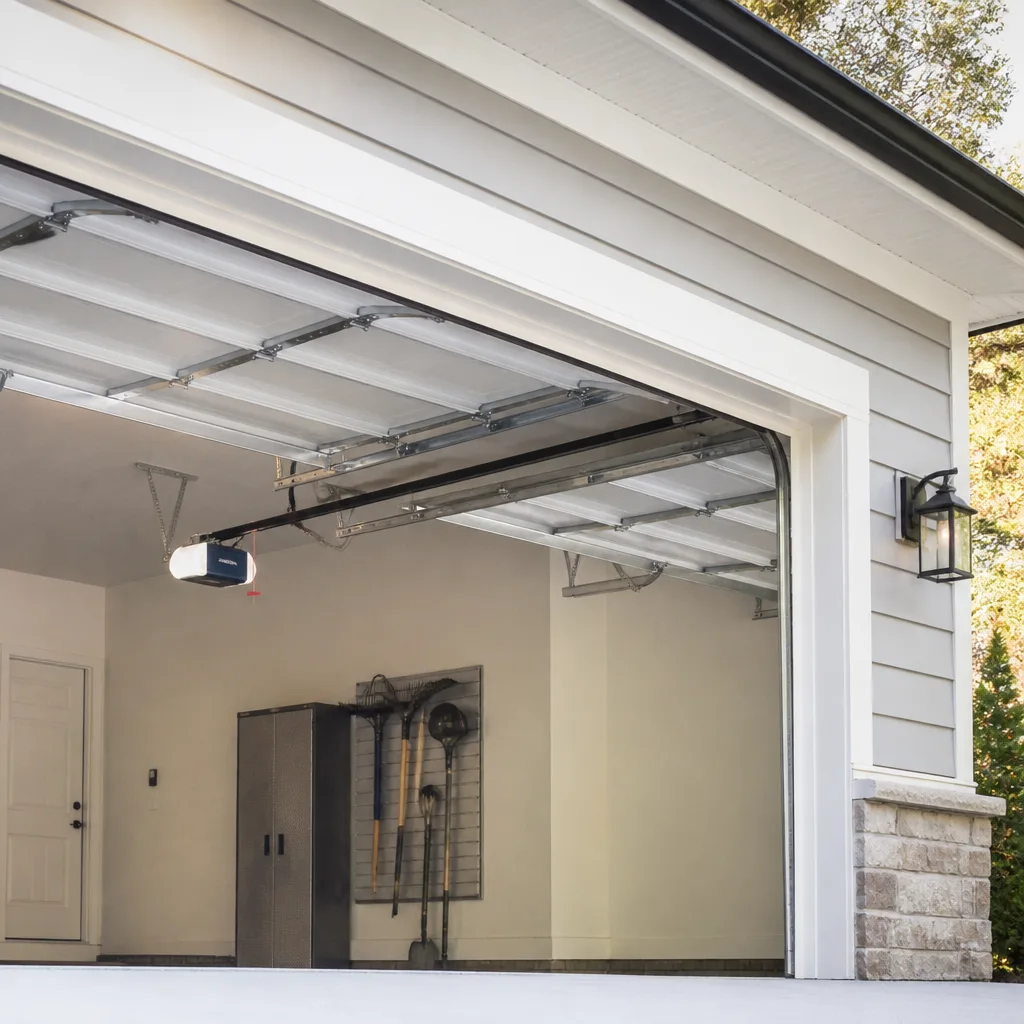 Chamberlain openers
Full 25-point door and opener safety check with every visit - springs, cables, rollers, tracks, and your LiftMaster or Chamberlain opener included
You get a price before we start. It does not change when the pro arrives.
Get your free estimateGarage Door Warning Signs: A Chevy Chase Homeowner’s Reference Guide
A garage door that “seems slower than it used to be” is either a $12 lubrication job or a motor nearing the end of its duty cycle, and the difference is often audible if you know what to listen for. That’s the problem with most warning-sign advice: it treats every groan and shudder as an emergency, which is as expensive as ignoring the real ones. In this guide, we map specific symptoms to specific failing components so you know what to watch, what to fix and what to stop using right now. We’ll show you how to read sound, spot spring wear from the ground, decode opener behavior on LiftMaster, Chamberlain and Genie units, and run a 60-second safety test that tells you a lot about the health of the whole system. Living in Chevy Chase means freeze-thaw winters and humid summers, both of which stress door hardware in ways worth understanding.
Quick Answer
The warning signs that matter most on a garage door are a snapping or popping sound (spring failure), jerky or uneven movement (track, roller or spring imbalance), a door that reverses before closing (safety sensor or opener fault), and visible gaps or stretching in the springs above the door. Cosmetic noises like light rattles are usually loose hardware and can wait. Anything involving torsion springs, snapped cables or a door that drops on its own is a stop-using-it situation and should be handled by trained technicians.
Styles & brands we work with
- Raised-panel steel
- Carriage house
- Modern flush
- Full-view glass
- LiftMaster openers
- Chamberlain openers
Table of Contents
- What Your Door’s Sounds Are Telling You
- Spotting Torsion Spring Wear from the Ground
- Opener Behavior Patterns and What They Mean
- Uneven or Jerky Movement: Track Issue or Spring Failure?
- The 60-Second Safety Reversal and Balance Test
- When to Stop Using the Door Immediately
- Brand-Specific Notes: LiftMaster, Chamberlain, Genie and Others
- Seasonal Checks That Fit a Chevy Chase Climate
What Your Door’s Sounds Are Telling You
Sound is the fastest diagnostic tool you have, and it’s free. Different noises point to different components, and the location of the noise matters as much as the sound. Stand in the garage with the lights on and listen the next time the door runs. Then match what you hear to the list below. In our experience, homeowners who learn to distinguish these four categories save themselves unnecessary service calls and catch real problems earlier.
- Grinding or scraping from the tracks: Usually worn rollers, a bent track section, or debris caught in the channel. Often fixable with roller replacement or track realignment. Grinding that gets louder over weeks points to metal-on-metal contact and should be looked at soon.
- Popping or snapping from above the door: Almost always a torsion spring issue. A single loud pop can be one spring failing; a second pop shortly after often means the pair is going. Stop using the door and call for spring repair.
- Rattling or clanking from the panels: Loose hinges, bolts or roller brackets. Usually cosmetic but worth tightening before vibration loosens more hardware.
- Motor strain or a humming opener with little movement: The opener is working but something is fighting it – a binding track, a worn gear in the opener, or a failing capacitor on older Chamberlain and Craftsman units. Left alone, this strain shortens motor life.
It helps to know which noises are new. A door that has always made a soft rumble is probably fine; a door that suddenly starts grinding after ten quiet years is telling you something changed. Listen for the timing, too. Noise during the first few inches of travel tends to point to the springs and drums. Noise at the very end of the cycle tends to be the opener and the travel limits.
Spotting Torsion Spring Wear from the Ground
You can assess torsion springs from the floor without touching them, and you should never touch them. Torsion springs sit on a shaft above the door and store enormous energy. Extension springs run along the horizontal tracks and carry similar risk. Both require proper winding bars, training and tools, which is why we send trained technicians for every garage door repair that involves them. From ground level, look for these signs:
- Visibly stretched coils. A healthy spring has tight, even coils. Wide gaps between coils on an extension spring mean it’s losing tension.
- Rust or discoloration on torsion springs. Chevy Chase’s humid summers and winter road salt tracked into garages accelerate rust on bare-steel springs. Rust weakens the wire over time.
- A garage door that feels light to lift manually. If you disengage the opener and the door lifts with almost no effort, the spring tension is too low or already gone. Do not test this if the door feels stuck or abnormally heavy.
- An audible creak on every cycle. Torsion springs should rotate quietly on their shaft. A metallic creak that repeats each time the door moves can mean the spring is binding.
- A door that hangs open partway. A door that won’t stay fully closed or fully open is a balance problem, and it often traces to spring tension.
Age isn’t the whole story. A torsion spring that runs the door four times a day wears out faster than one that runs twice. Spring life is measured in cycles, not years, which is why two identical-looking doors on the same Chevy Chase block can fail months apart.
Opener Behavior Patterns and What They Mean
Modern openers are diagnostic tools. When a LiftMaster, Chamberlain or Genie unit behaves oddly, it’s usually reporting a specific fault through its behavior. The brand matters because the logic differs slightly between platforms, which is part of why we focus on garage door opener repair across the major brands before recommending a replacement. Here’s how to read the most common behaviors:
- Hesitation before the door starts moving: Often a sign of a failing capacitor or a logic board that’s starting to go. Common on older Chamberlain and Craftsman units. Sometimes a nearly dead remote battery is the culprit, so change that first.
- Reversing mid-close or immediately after starting: The safety sensors are blocked, misaligned or dirty, or the opener’s travel limits have drifted. Also worth checking for a spider web or leaf that’s been pushed into the sensor line.
- Partial travel (opener runs but door only goes up halfway): Usually a travel limit or force setting issue, or a binding door fighting the opener. On belt-drive Genie units, it can be a slipping belt.
- Nothing happens at all with a fresh remote: Dead wall button, tripped breaker, or a failed logic board. Not always a reason to replace the opener; often a repair.
- Repeated beeping before closing: On newer LiftMaster and Chamberlain units, the beep and flashing light are the unit telling you the safety reversal system is being triggered or the battery backup is low.
If you run a Wi-Fi-enabled LiftMaster, check the app. Many recent units log a fault code alongside the behavior, and that code narrows the diagnosis fast. A good rule of thumb: if the opener is doing something predictable and repeatable, it’s usually a repair. If it’s doing something random, suspect the logic board.
Uneven or Jerky Movement: Track Issue or Spring Failure?
This is the question that trips up most homeowners. A door that moves unevenly could be a simple track or roller fix, or it could be a spring imbalance that’s one cycle away from a snap. The difference matters because one is safe to monitor and the other isn’t. Here’s a general way to tell them apart before you call anyone:
- Watch the gap at the top and bottom of the door. If one side rises faster than the other – the door tilts noticeably as it climbs – that points to a spring tension imbalance, and you should stop using it.
- Look at the tracks. A visible bend, kink or dent in a vertical or horizontal track means the door is following a warped path, which is a track and roller issue. These are usually repairable without touching the springs.
- Check the rollers. Worn rollers (flat spots, missing bearings, loose stems) cause jerky travel. A door with visibly tilted rollers can usually be fixed by replacing them.
- Listen for the sound at the point of the jump. A click or clank at the moment the door stutters suggests a roller or hinge; a metallic creak suggests spring tension.
- Clean and lubricate the tracks and hinges, then test again. If the jerky movement goes away, it was a friction issue. If it stays, it’s mechanical.
A door that runs smoothly in one direction but stutters in the other is often a torsion cable issue. Cables are just as dangerous as springs and should never be handled by anyone without training. If you see a frayed cable, treat it as an emergency.
The 60-Second Safety Reversal and Balance Test
This is the test we recommend running once a season. It takes a minute and tells you whether your safety features are working and whether the door is balanced. You’re not adjusting anything – just observing. Do this with no one standing in the path of the door.
- Disengage the opener. Pull the release handle hanging from the trolley so the door is no longer connected to the opener.
- Lift the door halfway by hand and let go. A properly balanced door stays put at the halfway point. If it falls, the springs aren’t carrying the weight. If it rises, tension is too high. Either result means the door needs a spring adjustment by a trained technician.
- Re-engage the opener. Push the door to the fully closed position and pull the release handle back so the trolley reconnects.
- Run the door and interrupt the safety sensor beam with a broom or large box while the door is closing. The door must reverse immediately. If it keeps closing, the safety system is faulty and the door should not be used until repaired.
- Test the pressure reversal. With the door closing, press lightly upward on the door as it moves. The door should reverse. If it doesn’t, the force setting is too high.
Write down the results. If the balance test fails, the next step is spring work, not a track adjustment. If the reversal test fails, the sensor or force setting is the issue. Both are diagnostics you can hand to a technician, and both save you time when you call.
When to Stop Using the Door Immediately
Some symptoms are monitor-and-schedule; others are stop-now. The stop-now list is short and specific, and it’s the one we wish every Chevy Chase homeowner had on the inside of the garage wall:
- A loud pop or snap from above the door. Spring failure. The door may still open once or twice but the remaining spring and cable are carrying double load. Stop.
- A door that drops or slams rather than lowering smoothly. Runaway door. Spring or cable failure. Stop.
- Visible frayed or broken cable. Never wiggle or try to reroute a failing cable. Stop.
- Door hanging crooked with the gap bigger on one side. Spring imbalance or cable issue. Stop.
- Any door with a child or pet beneath it. Not a symptom, but a rule. A failing door is unpredictable and people come first.
If you’re not sure, err on the side of caution – especially if the door was manufactured before 1993, when federal law began requiring safety reversal systems. Older doors in Chevy Chase homes are grandfathered in some cases, which makes the safety reversal test even more important.
Brand-Specific Notes: LiftMaster, Chamberlain, Genie and Others
Different brands break in different ways, and knowing the common failure mode for the brand you own shortens the diagnostic call. We work on eight major brands – LiftMaster, Chamberlain, Genie, Clopay, Amarr, Wayne Dalton, Craftsman and Raynor – and the patterns below come up repeatedly. If you’re replacing the whole door, that gets handled under garage door installation, but most of what follows is repair territory.
- LiftMaster and Chamberlain: Same parent company, similar logic boards. Wi-Fi modules and battery backup units are common failure points on newer installs. Belt-drive units run quietly but the belt can slip. Older chain-drive units are durable and often worth repairing over replacing.
- Genie: Belt-driven and screw-drive models. Logic board failures and misaligned limit switches are the most common Genie repair we see. Their older screw-drive units need periodic lubrication to keep travel smooth.
- Craftsman: Many Chevy Chase homes have Craftsman openers from the 1990s that are still running. Gear and sprocket wear is common. Replace the gear rather than the unit if the motor is sound.
- Clopay and Amarr doors: Panel and hardware wear tends to be the issue on these doors, not the opener. Hinges and roller brackets loosen over years. Spring replacement is usually straightforward with the right winding tools.
- Wayne Dalton: Their Torquemaster spring system is different from a standard torsion setup and needs a technician familiar with it. We see misdiagnosed Torquemaster “spring failures” that turn out to be drums, which is exactly the kind of correction we make on a diagnostic visit.
The pattern across brands is simple: what matters is whether the failure is in the opener head, the mechanical door, or the spring and cable system. Get that diagnosis right and the fix follows.
Seasonal Checks That Fit a Chevy Chase Climate
Chevy Chase straddles the line between Washington DC’s humid summers and the colder air that comes down from Maryland. That gives us freeze-thaw cycles in winter and sticky humidity in summer, both of which affect door hardware. A few small habits go a long way:
- Lubricate the rollers, hinges and torsion shaft once or twice a year with a garage-door-rated lubricant. Skip the tracks themselves; a light wipe-down is enough and too much grease attracts grit.
- Look at the springs after the first cold snap. The first few freeze-thaw cycles are when tired springs give up.
- Check the safety sensor lens after rain and after any yard work. Dust and cobwebs misalign the sensor more often than people expect.
- Watch for rust on the spring coils in late summer. Humid months accelerate rust on bare-steel springs. Light surface rust is fine; pitting is not.
- Re-run the 60-second safety test when you change the clocks.
None of this replaces an annual once-over from a technician, but it does mean you’ll catch most small problems before they become big ones. Most of the doors we’re called out to in Chevy Chase show early warning signs that went unnoticed for months.
Common Mistakes to Avoid
- Assuming a slow door is a dead opener. Nine times out of ten it’s a spring or roller issue, and replacing the opener won’t fix it. Diagnose the mechanical door first.
- Ignoring one pop as a one-off. A single pop from a torsion spring is often one of two springs failing. The second follows, sometimes the same day. Stop using the door after the first pop.
- Spraying WD-40 into the tracks. It attracts dust and gumming. Use a lubricant made for garage door hardware, not a general-purpose solvent.
- Testing a “light” door by lifting it with the opener engaged. Disengage the opener first, then test. Lifting against the opener can damage the trolley and the motor gear.
- Assuming pre-1993 doors are safe. Federal law changed in 1993 to require safety reversal. If your door predates that, the reversal test is critical, and so is a technician check.
- Replacing the whole door when a repair will do. Panels, rollers, spring sets and openers are all replaceable individually. Get a diagnosis before you authorize a full replacement.
- Calling a general handyman for spring or cable work. High-tension springs and cables carry serious injury risk. Use technicians trained on springs specifically.
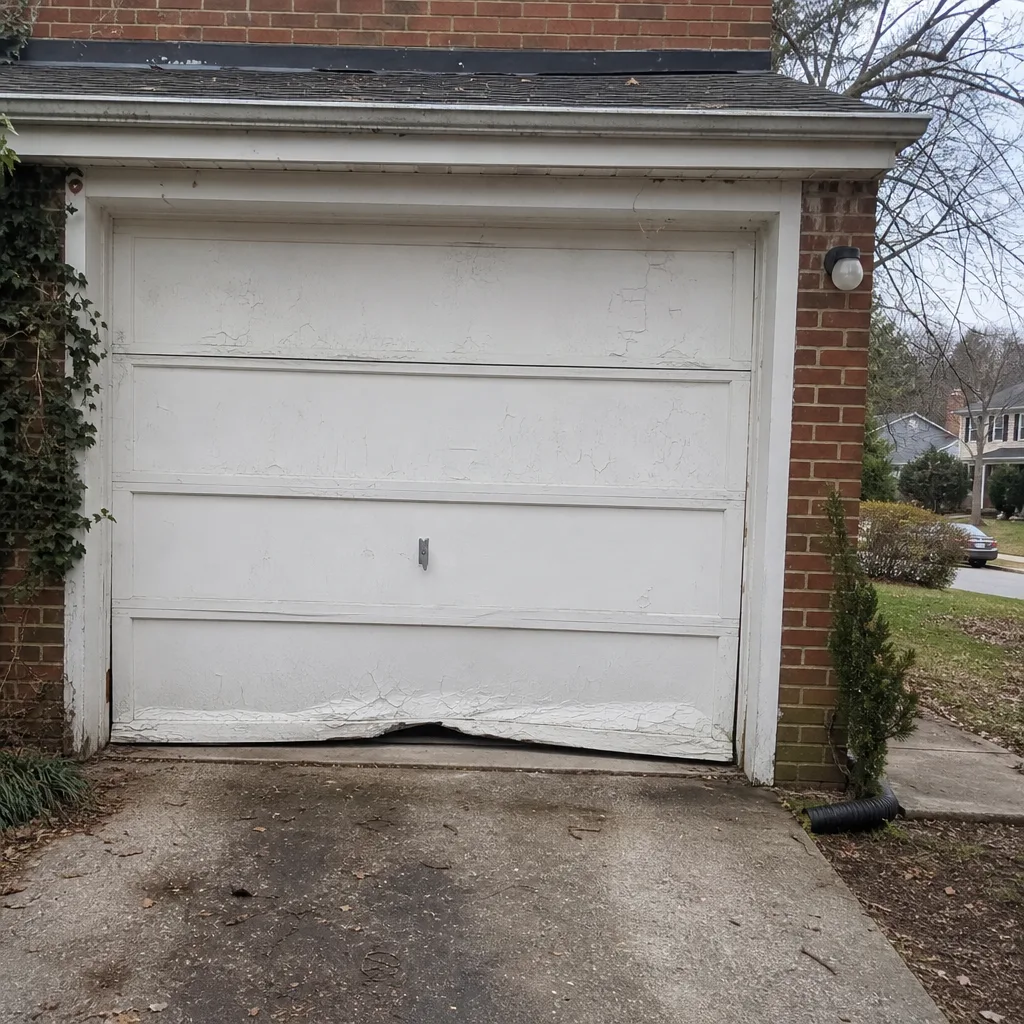
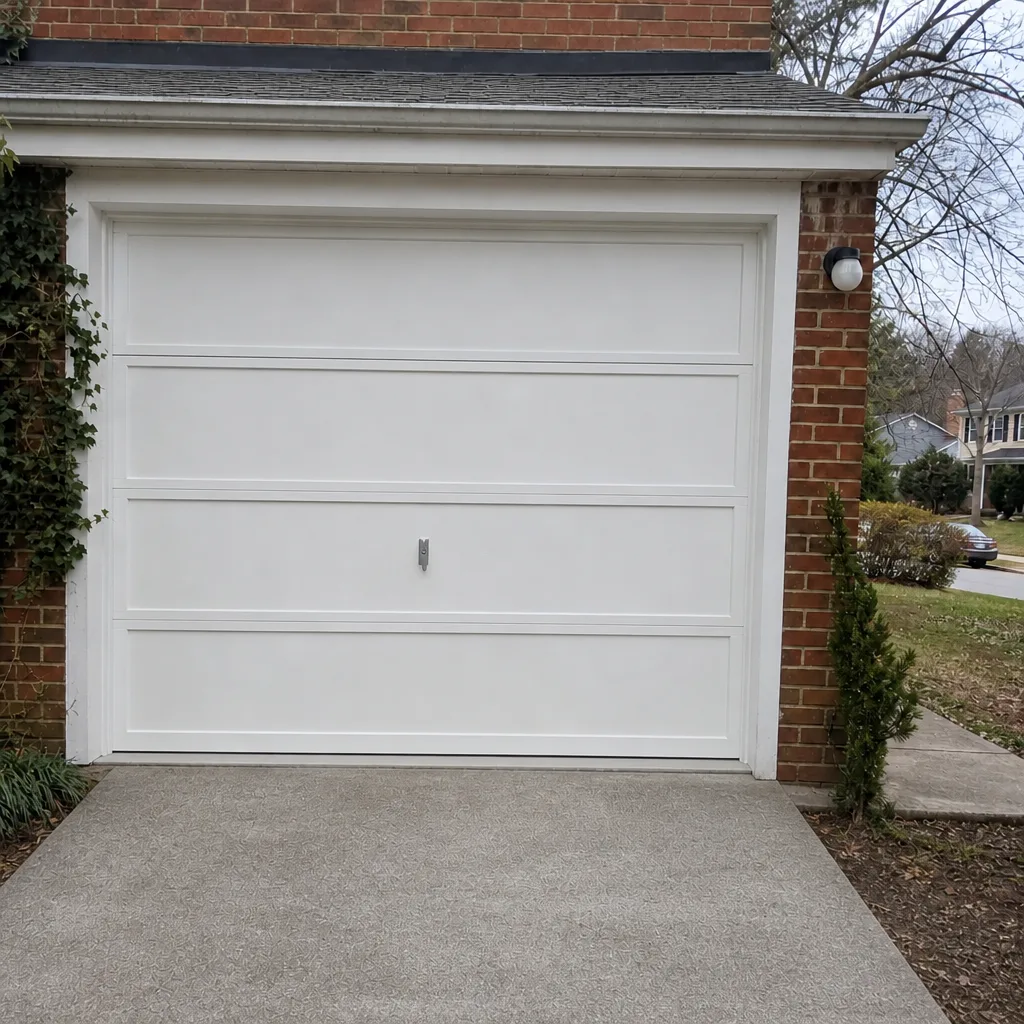
See the difference
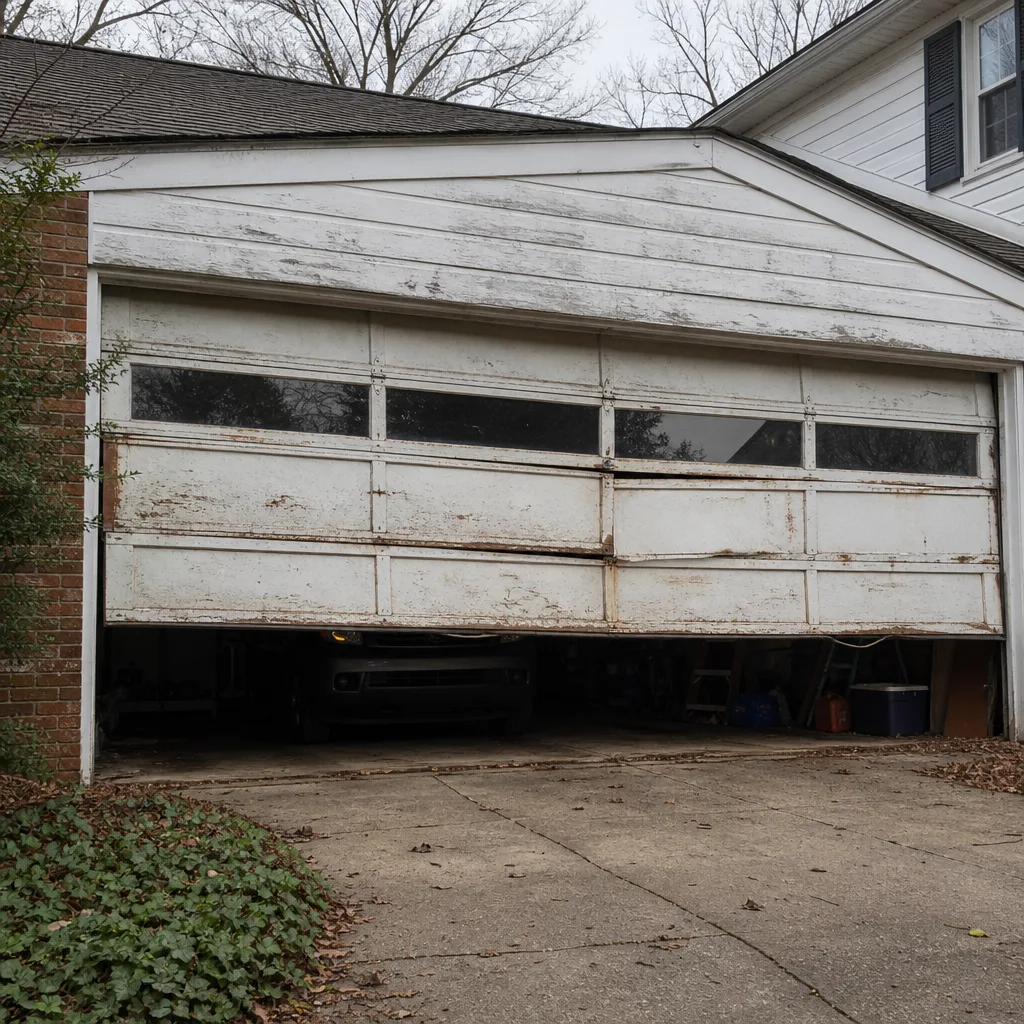 Before
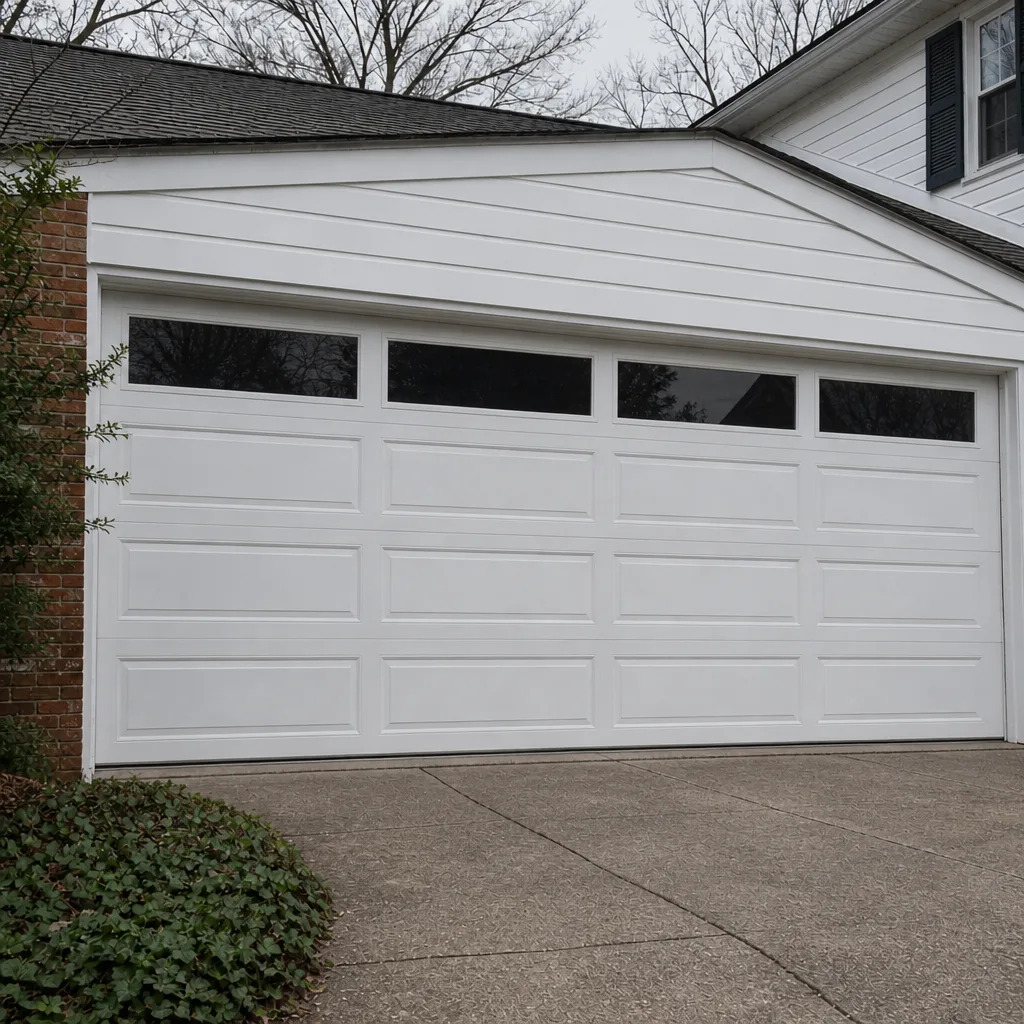 After
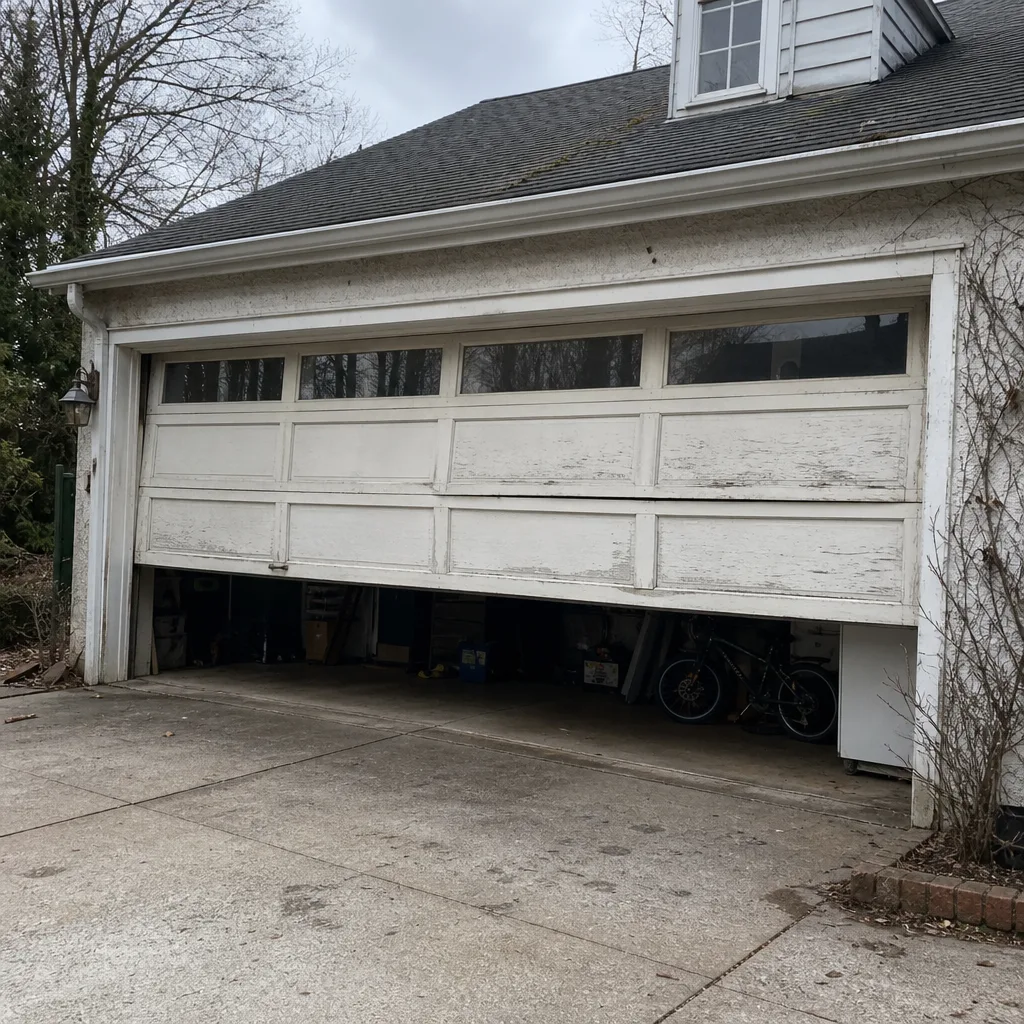 Before
 After
 Before
 After
When to Call a Professional
Call a professional the moment you hear a pop from above the door, see a frayed cable, spot a gap larger on one side than the other, or fail the safety reversal test twice in a row. Also call if your door is jerky after cleaning and lubrication, if the opener runs but doesn’t move the door, or if the door has never had a spring inspection and you can’t remember the last time anyone looked. These are exactly the situations where guessing costs more than calling. Chevy Chase Garage Door Repair offers free estimates in Chevy Chase – call (855) 684-8076. We answer 24/7 and dispatch from 7am to 7pm, Sunday through Friday.
Frequently Asked Questions
Spring repair in Chevy Chase is priced per job, with the written estimate setting the final number before any work starts. We quote each spring individually because torsion springs are usually replaced as a matched pair, so a two-spring job costs more than a single spring. Call (855) 684-8076 for a free estimate – we quote on-site and you approve the price before we begin.
Spring and stuck-door calls are exactly the kind of work our emergency service is built for, and same-day visits are often possible when you call in the morning. Call (855) 684-8076. We answer 24/7, with fast dispatch from 7am to 7pm, Sunday through Friday. A call outside dispatch hours is booked into the next opening.
No – the written estimate you approve is the price you pay. We diagnose on-site, write up the repair and the price, and only proceed once you’ve said yes. If we find something during the work that changes the scope, we stop and explain before continuing. No surprise invoices.
The independent local professional we connect you with is licensed and insured as required by their state, and our technicians have up to 15 years of experience. Spring and cable work is high-tension and requires proper tools and training, which is why we handle it as a professional job rather than a weekend project.
It’s usually one of three things: dry rollers and hinges, a tired spring, or a motor nearing the end of its duty cycle. Start with lubrication and a track clean-up; if the door is still slow, listen to the motor. A strained hum or a delay before movement points to the opener, while a quiet but sluggish door usually means spring tension. Call (855) 684-8076 for a free diagnostic estimate.
We work on eight major brands – LiftMaster, Chamberlain, Genie, Clopay, Amarr, Wayne Dalton, Craftsman and Raynor – covering the vast majority of doors and openers in Chevy Chase homes. That means we service the brand you already own instead of pushing you toward a replacement you don’t need. Call (855) 684-8076 to book a free estimate.
The Bottom Line
Warning signs only help if you can tell cosmetic from imminent failure. Popping springs, jerky or lopsided movement, reversing doors and frayed cables are stop-now symptoms; rattles, light grinding and a door that just feels a little sluggish are watch-and-schedule. Run the 60-second reversal and balance test once a season, listen to the door, and know which noises point to the springs versus the opener. We see every brand of door and opener in Chevy Chase, and the ones that last are the ones whose owners pay attention early. When something doesn’t sound right, get a diagnosis before it becomes a bigger repair. For more on what we do, visit our Chevy Chase Garage Door Repair home page.
Call (855) 684-8076 for a free estimate. We answer 24/7, with fast dispatch from 7am to 7pm, Sunday through Friday. Prices are set by the written estimate you approve, and no work starts until you’ve agreed to it.
Written by the team at Chevy Chase Garage Door Repair.