
Last updated November 21, 2026
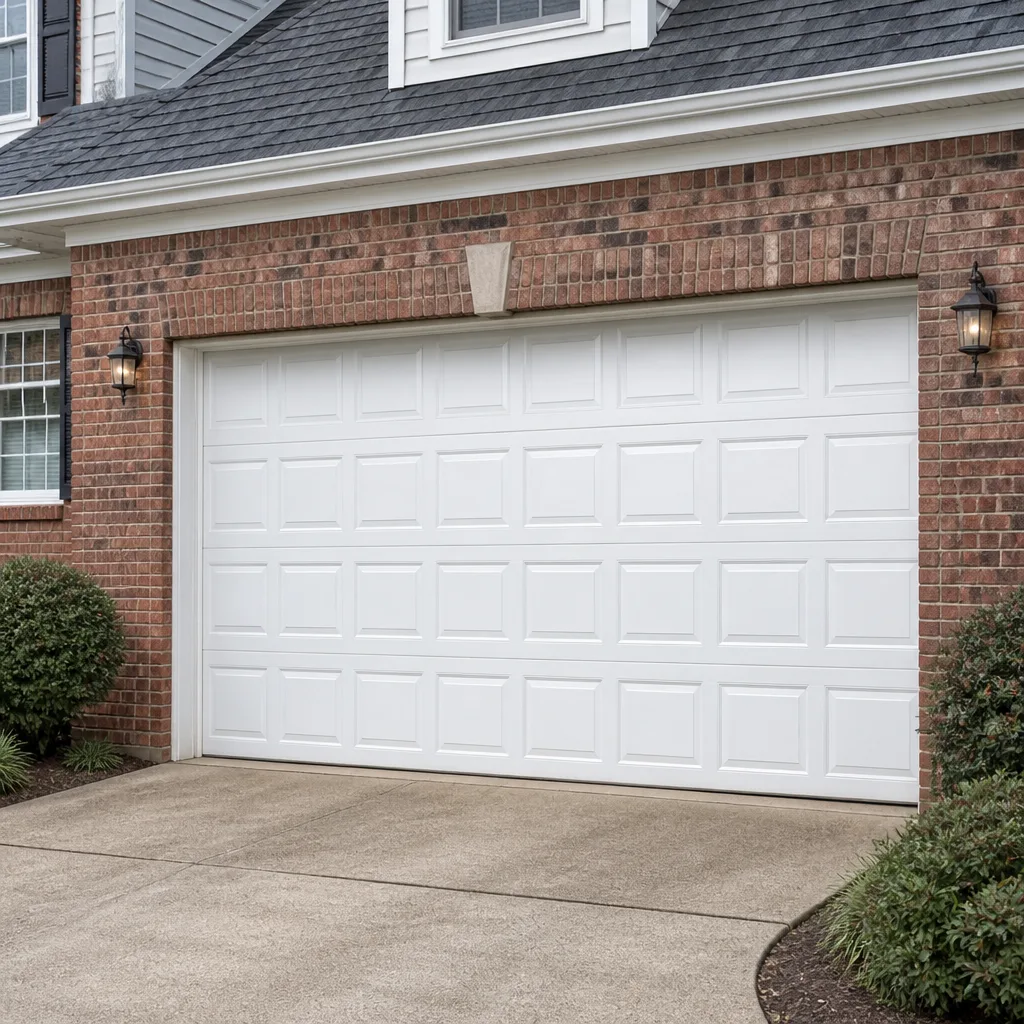 Raised-panel steel
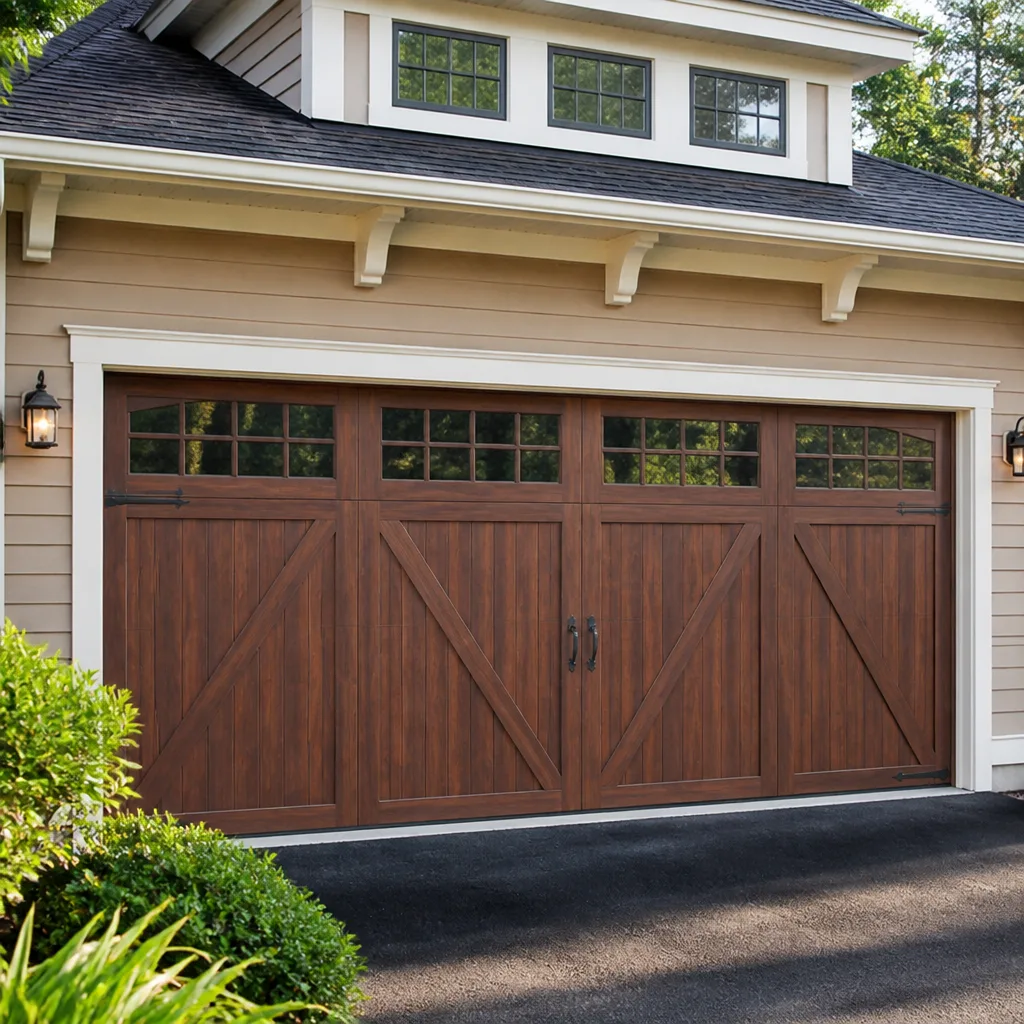 Carriage house
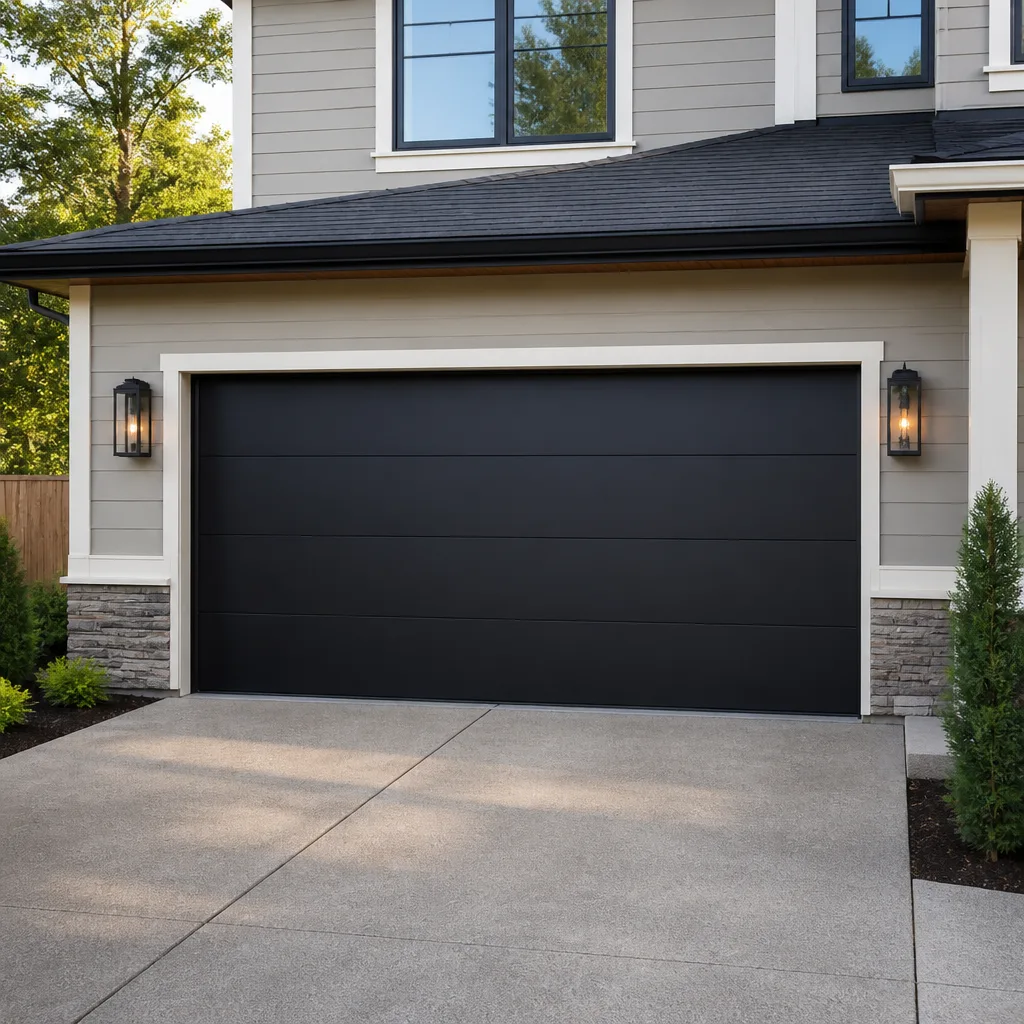 Modern flush
 Full-view glass
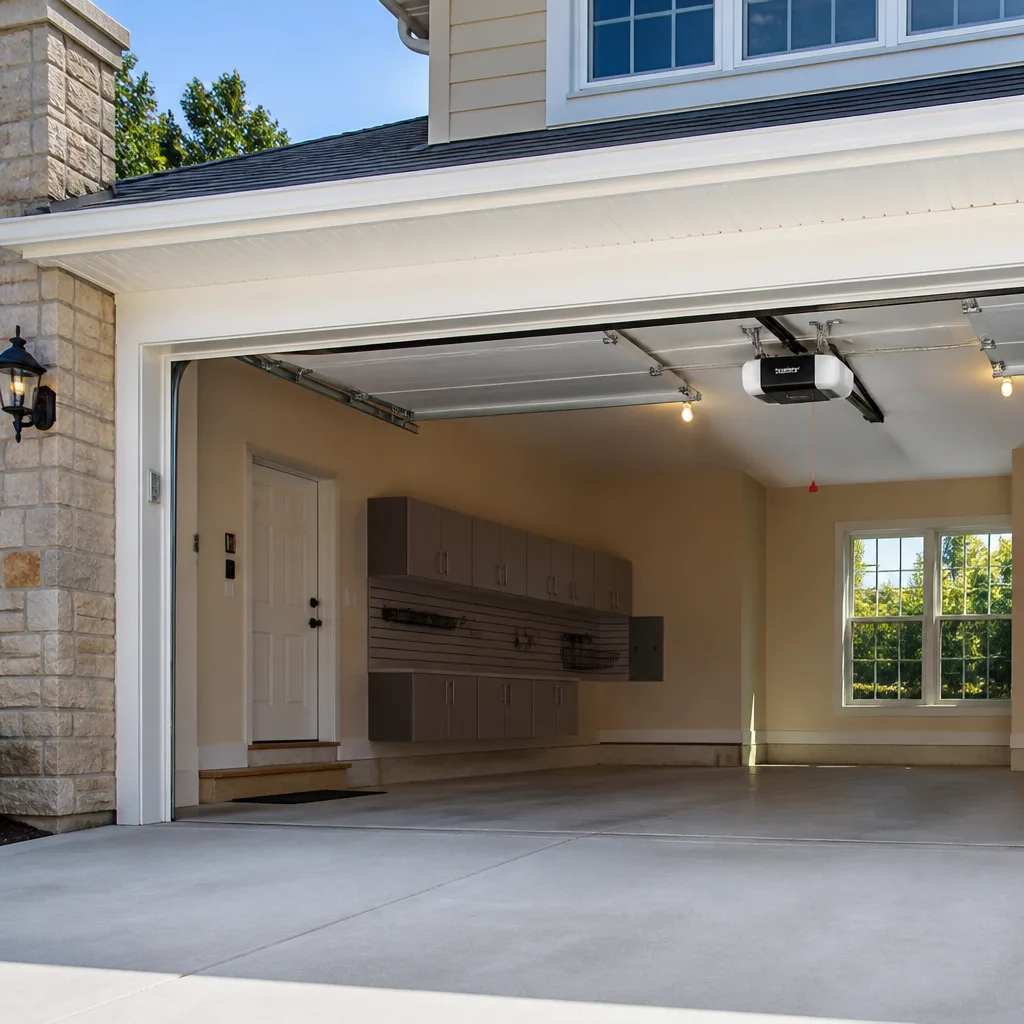 LiftMaster openers
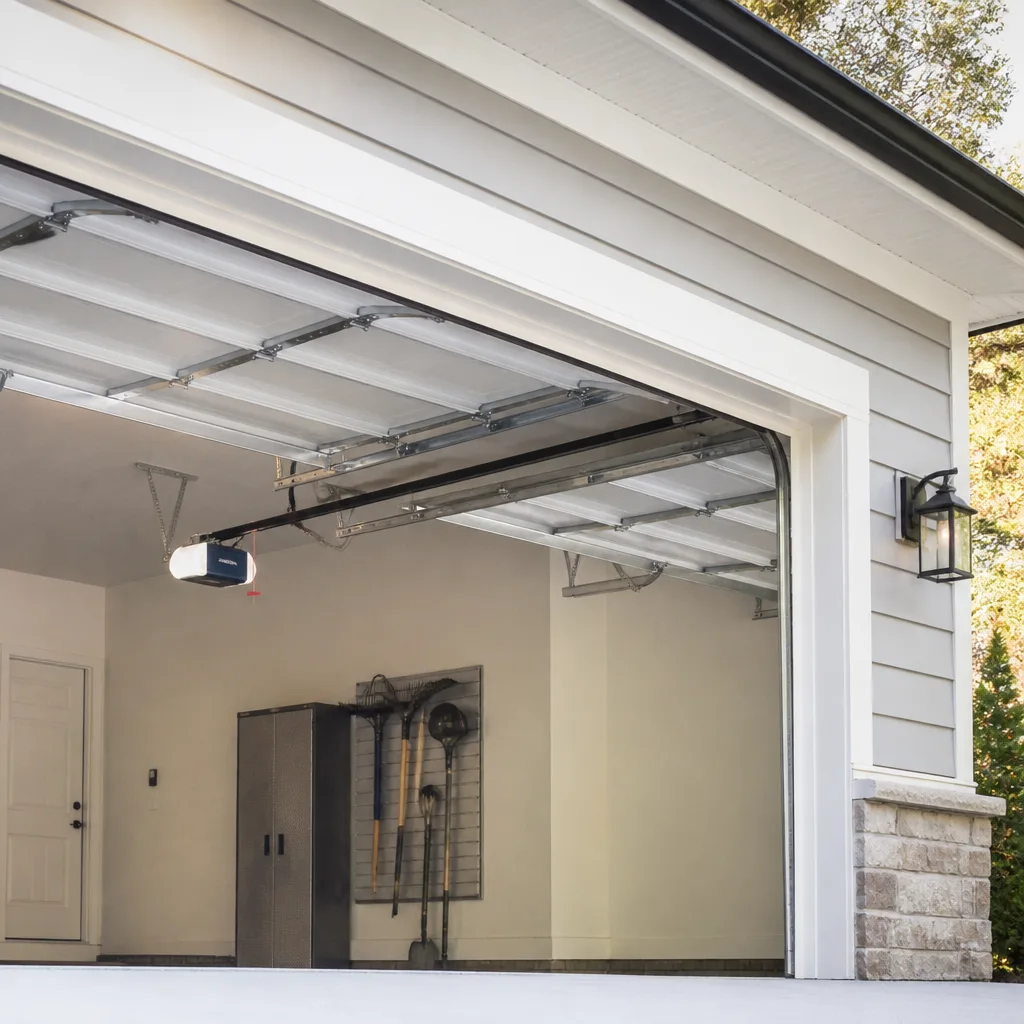 Chamberlain openers
Full 25-point door and opener safety check with every visit - springs, cables, rollers, tracks, and your LiftMaster or Chamberlain opener included
You get a price before we start. It does not change when the pro arrives.
Get your free estimateDIY vs Professional Garage Door: The Chevy Chase Homeowner’s Decision Guide
Replacing a bottom weatherseal is a reasonable Saturday afternoon task. Adjusting torsion spring tension is not. A fully wound torsion spring holds enough stored energy that a slipping winding bar can cause a serious injury in an instant, and that single distinction explains most of the confusion around garage door DIY. The question isn’t whether you’re handy. It’s whether you know exactly what’s under tension and what happens if it lets go. In this guide we draw the line at the component rather than the whole job, so you can see which repairs are genuinely within reach in a Chevy Chase garage and which ones belong in trained hands.
Quick Answer
Most garage door repairs split cleanly into two groups. Weatherseals, rollers, hinges, remotes and photo-eye sensors are reasonable DIY projects for a careful homeowner. Torsion springs, extension springs, cables, and track realignment are not, because they involve stored mechanical energy or heavy moving panels that can injure you without warning. When in doubt, treat the door as a professional job and get a written estimate before anything is touched.
Styles & brands we work with
- Raised-panel steel
- Carriage house
- Modern flush
- Full-view glass
- LiftMaster openers
- Chamberlain openers
Table of Contents
- The Component Map: What’s Safe to Touch and What Isn’t
- Why Torsion Springs Are a Different Category of Risk
- Doing the Math: DIY Costs vs. Professional Repair
- Permits and Code in the DC Area for Full Door Installations
- Opener Problems: Diagnose Before You Replace
- What to Have Ready Before a Technician Arrives
- Chevy Chase Housing, Weather, and Your Door
- When Your Door Fails for the First Time
The Component Map: What’s Safe to Touch and What Isn’t
Before you decide on any garage door task, it helps to know which parts carry a real risk and which are essentially cosmetic. We’ve worked on nearly every residential door and opener platform in Chevy Chase, and the same components come up again and again. Here’s how the line actually falls.
Generally safe for a careful homeowner
- Bottom weatherseal – the rubber strip along the bottom of the door. A cracked or flattened seal lets in water and drafts and is a straightforward replacement.
- Rollers – the small wheels in the track. Nylon rollers wear quietly; steel rollers get noisy. Swapping them is slow, careful work but not dangerous.
- Hinges – the metal joints between panels. When they squeak or crack, the replacement is bolt-on.
- Remotes and keypads – reprogramming a LiftMaster or Chamberlain remote, or replacing a dead keypad battery, is a household-level job.
- Photo-eye sensors – the small lenses at the bottom of each track. Cleaning them or realigning a bumped bracket is safe.
- Lubrication – a light application of proper garage door lubricant on rollers, hinges and the torsion tube bearing plate is routine maintenance.
Leave to trained technicians
- Torsion springs – mounted on the shaft above the door, wound tight, and under enormous stored energy.
- Extension springs – mounted alongside the horizontal tracks, also under tension, and require a containment cable for safety.
- Cables – steel cables that lift the door, under tension and capable of whipping if released.
- Track realignment – bent or out-of-plumb tracks shift the load across the whole door and affect how every other component behaves.
- Panel replacement – heavy, awkward, and requires the door to be balanced and disconnected first.
- Opener installation – requires mounting into ceiling structure correctly and matching the drive type to the door’s weight.
One useful rule of thumb: if the component is under tension or holds the door’s weight, treat it as professional. If it moves, seals, senses, or signals, it’s usually fair game. You can read more about the specific work we handle on our garage door repair page, which covers the full range of failures we see.
Why Torsion Springs Are a Different Category of Risk
Torsion springs are not a bigger version of the repair you did last weekend. They’re an entirely different type of hazard, because they store energy rather than just resist weight. A properly wound torsion spring is holding thousands of inch-pounds of torque, and when you release that energy through the winding bars the release is fast enough that a slip of grip or a wrong-sized bar can end the job at the emergency room.
The reason YouTube tutorials understate the risk is simple. A camera can’t show the torque. A winding bar that feels manageable when you’re watching a video feels completely different when you’re standing on a ladder with the door’s full weight hanging behind it. We handle every spring repair with trained technicians, and even after years on the job the procedure is deliberate, measured, and never rushed.
What actually goes wrong
- The homeowner uses an undersized winding bar or a screwdriver, which doesn’t seat fully in the winding cone.
- The bar slips out mid-wind, releasing the spring tension through the cone and the bar itself.
- The homeowner stands directly in the release path of a bar or spring that has just unloaded.
- The door’s weight is released unexpectedly because the cables and springs are working against each other.
- The new spring is the wrong wire gauge or length, so it’s under improper tension from the moment it’s installed.
If your door has a snapped torsion spring, the correct move is not to wind anything yourself. Call us and stay clear of the door. We can usually tell you on the phone what the likely cause is, and a technician can confirm on arrival. Our garage door spring repair page goes deeper into how we assess and replace springs, but the short version is: this is the one part of the job we’d never recommend as DIY.
Doing the Math: DIY Costs vs. Professional Repair
The cost-benefit math for garage door work is not as lopsided as people assume. A few tasks genuinely save money when you do them yourself, and a few end up costing more once you factor in the parts you buy twice, the tool you’ll never use again, and the small chance of a repair that makes the next problem worse. Here’s how we see the split.
| Task | Typical DIY approach | Typical professional approach |
|---|---|---|
| Bottom weatherseal replacement | Seal kit, an hour of patient work | Measured, cut, and fit to your door’s exact width |
| Roller replacement | Roller set, careful one-at-a-time swap | Full set replaced together, usually same visit as a tune-up |
| Remote or keypad programming | Free, if you have the manual | Included with most service calls |
| Photo-eye realignment | Free, ten-minute fix | Included with opener diagnostics |
| Torsion spring replacement | Not recommended at all | Trained technicians, correct spring matched to the door |
| Track realignment | Not recommended | Assessed with the door’s full load in mind |
| Opener replacement | Risky, requires ceiling mounting | Matched to door weight and existing wiring |
On the DIY-friendly side, the savings are real but modest. On the professional side, the value is partly in the parts and partly in avoiding a downstream problem: a poorly fitted seal that leaks, a roller installed at the wrong angle that wears the track, a remote that never quite syncs. For Chevy Chase homeowners, the best cost decision is usually DIY for the small jobs and professional for anything under tension or holding weight. We give written estimates before any work starts so you know the number you’re agreeing to. You can see the full range of what we handle on our garage door opener repair page for opener-specific work.
A quick note on spring pricing, because this is where people get surprised. A spring replacement quote is for one spring. If you have a two-spring setup and both are the same age, replacing them as a matched pair is almost always the right call, and the pair costs roughly twice the single-spring number. Ask for the quote to say clearly whether it’s one spring or both.
Permits and Code in the DC Area for Full Door Installations
Full garage door replacement is not just a procurement decision; in most of the DC area it’s also a permit decision. The exact rules vary by jurisdiction and can change, so the right move is to call your local building department before you order a door. Here’s the general shape of how it works in Chevy Chase and the surrounding neighborhoods.
- Check with your city or county building department. A new door is a structural element of the house, and many jurisdictions require a permit for replacement.
- Confirm the door meets current standards. Ask whether the department requires specific safety features on the new door, and whether it affects the tracks, springs, or opener.
- Confirm what the inspection covers. Some jurisdictions inspect the installation; others only require the permit. Ask before you book the work.
- Get the install written into the estimate. The installer should know whether the job needs a permit and what documentation you’ll need to keep.
- Check any HOA or historic-district rules. Chevy Chase has areas with architectural review, and a different door style or color may need approval before it’s ordered.
For DIY installations specifically, this is where the math usually breaks down. The permit and inspection burden, the disposal of the old door, and the risk of a door that doesn’t balance correctly after install make this a task most homeowners should hand off. Our garage door installation page covers how we approach measurement, brand matching (Amarr, Wayne Dalton, Clopay, Raynor, and others), and scheduling. If you’re comparing brands, we work on the door you already have and can tell you whether repair is the better call than replacement.
Opener Problems: Diagnose Before You Replace
Openers are the most frequently replaced garage door component that didn’t need replacing. In our experience, a large share of “dead” openers are actually a failing photo-eye, a stripped gear, a bad logic board, or a remote that just needs reprogramming. If your LiftMaster, Chamberlain, Genie, or Craftsman opener is acting up, the right first step is diagnosis, not a new unit.
Opener-first checklist
- Is the wall control dead too? If the wall button doesn’t work either, the problem is likely power, the logic board, or the safety sensors rather than the remote.
- Are the photo-eye lights solid? A blinking sensor light means the door won’t close by design. Cleaning the lenses or realigning the brackets often fixes it.
- Does the motor hum but the door doesn’t move? That points to a stripped gear or a broken trolley, both of which are repairable on most platforms.
- Is the door heavy to lift by hand? Stop using the opener. A heavy door usually means a spring problem, not an opener problem, and running the opener against a failing spring will burn it out too.
- Is the opener old enough to lack safety features? Pre-1993 openers without photo-eye sensors are a different conversation, and replacement is often the right answer.
This is why we lead with diagnosis across LiftMaster, Chamberlain, Genie, and Craftsman platforms. A new opener is a reasonable last step, not a first one. If you’re in Chevy Chase and your opener has stopped responding, that’s a same-day repair conversation for us. Call (855) 684-8076 and have the model name and the door’s behavior ready. We answer 24/7. Fast dispatch from 7am to 7pm, Sunday through Friday.
What to Have Ready Before a Technician Arrives
You can shorten a service call and get a sharper diagnosis by preparing a few things before the technician pulls up. None of these require tools, and together they turn a 45-minute visit into a much faster one.
- The opener brand and model. Check the label on the back of the motor unit. LiftMaster, Chamberlain, Genie, and Craftsman all have different diagnostic sequences, and knowing the model tells us what to bring.
- A description of the failure. “The door goes up two feet and reverses” is far more useful than “it’s broken”. Note when it happens and whether it’s the door or the opener.
- The door’s weight. Disconnect the opener and lift the door by hand at the middle. If it’s heavy, note that, and don’t force it.
- Any history. Recent spring replacement, a new opener, a bump against the track, a power outage. Any of these narrow the diagnosis quickly.
- The remote and keypad. Have them on hand so the technician can program them on the same visit.
- Access to the garage. Clear the area under the door and around the tracks, and make sure the ceiling above the opener is reachable.
We quote and agree to the price before any work starts, so having this ready means the estimate is accurate rather than provisional. A confusing diagnosis often just means a return visit, and return visits cost more than a clear first call.
Chevy Chase Housing, Weather, and Your Door
Garage doors in Chevy Chase age differently than doors in drier or newer parts of the country. The local housing stock includes a lot of homes with original wood-frame doors alongside newer insulated steel doors, and the two fail in very different ways. A wood door from an older Chevy Chase home may look fine on the street side while the rails and stiles inside are soft from seasonal moisture. A newer steel door might look flawless while the bottom seal has already flattened and started letting water in.
Our summers bring humidity, our winters bring freeze-thaw cycles, and the seam between garage floor and driveway is where most of the water gets in. That seam is also where we see the fastest wear on bottom seals. The DC area’s tree cover adds a second factor: pollen season and falling leaves both load up the tracks and rollers, especially on north-facing garages that hold moisture longer. A door that squeals or drags in spring is usually complaining about debris in the track, not a failed component.
Chevy Chase also has a mix of attached and detached garages, and detached garages tend to have doors that are less protected from the weather. If your Chevy Chase garage is detached, treat the door and opener as exterior equipment rather than interior: check the seal, the rollers, and the opener housing a little more often than you would on an attached garage. The other local factor is door style. A lot of Chevy Chase homes use paneled wood or wood-look doors where a swap is more of a match-the-house decision than a fit-the-opening one, and that pushes careful homeowners toward repair over replacement. That’s a good instinct when the door still balances and the frame is sound.
When Your Door Fails for the First Time
The first time your garage door fails, you have two instincts competing: call someone immediately, or diagnose it yourself and see if it’s a simple fix. Both are valid, and the sequence matters more than the instinct. A quick five-minute check can save you a service call, and a quick stop on a dangerous diagnosis can save you a lot more than that.
- Look and listen before you touch. Is the door off its tracks? Is a spring visibly broken (a clear gap in the coil)? Is the opener running but the door not moving? Each of these leads somewhere different.
- Check the opener and remote. If the wall control works but the remote doesn’t, the problem is the remote or the receiver, not the door. If neither works, check the breaker and the photo-eye lights.
- Check the balance. Disconnect the opener and lift the door halfway by hand. It should stay put. If it drops, the springs are failing and the door should not be operated until a technician looks at it.
- Stop if a spring or cable is involved. Never try to move, adjust, or remove a broken spring or a cable under tension. Keep people and pets clear of the door.
- Book the right visit. A door that’s stuck open, a snapped spring, or a dead opener qualifies for emergency service. A door that’s noisy or slightly out of alignment can usually be scheduled.
We treat emergency garage door service as core work, not a premium tier. When a spring snaps or a door is stuck open and the house isn’t secure, we want to hear about it. Call (855) 684-8076. We answer 24/7, and fast dispatch runs from 7am to 7pm, Sunday through Friday. A call outside dispatch hours is booked into the next opening. And before we talk about cost, know this: the price is quoted and agreed before any work starts.
Common Mistakes to Avoid
- Treating YouTube as the authority on torsion springs. A tutorial can demonstrate the motion but can’t show you the stored force behind it, and a wrong-sized winding bar is how people get hurt. Leave the winding to trained technicians.
- Using a screwdriver or undersized bar on a winding cone. The bar has to seat fully to hold the tension. Anything less than the correct tool is a hazard.
- Running the opener against a heavy door. A door that’s hard to lift by hand is telling you the springs are failing. Running the opener anyway burns out the motor and gears and turns a spring repair into a spring-plus-opener repair.
- Replacing the opener before diagnosing it. Most “dead” openers are photo-eye, gear, or logic-board problems that are cheaper to repair than replace. Diagnose first.
- Ignoring the bottom seal in Chevy Chase’s freeze-thaw cycle. A flattened or cracked seal quietly lets water into the seam between floor and driveway, and that water does damage long before you notice the door itself.
- Ordering a new door before checking the permit and HOA rules. In many DC-area jurisdictions a new door needs a permit, and Chevy Chase has areas with architectural review. Confirm before you buy.
- Skipping the written estimate. A verbal price on a garage door job often becomes a higher invoice. Insist on a written, per-job estimate before any work begins.
See the difference
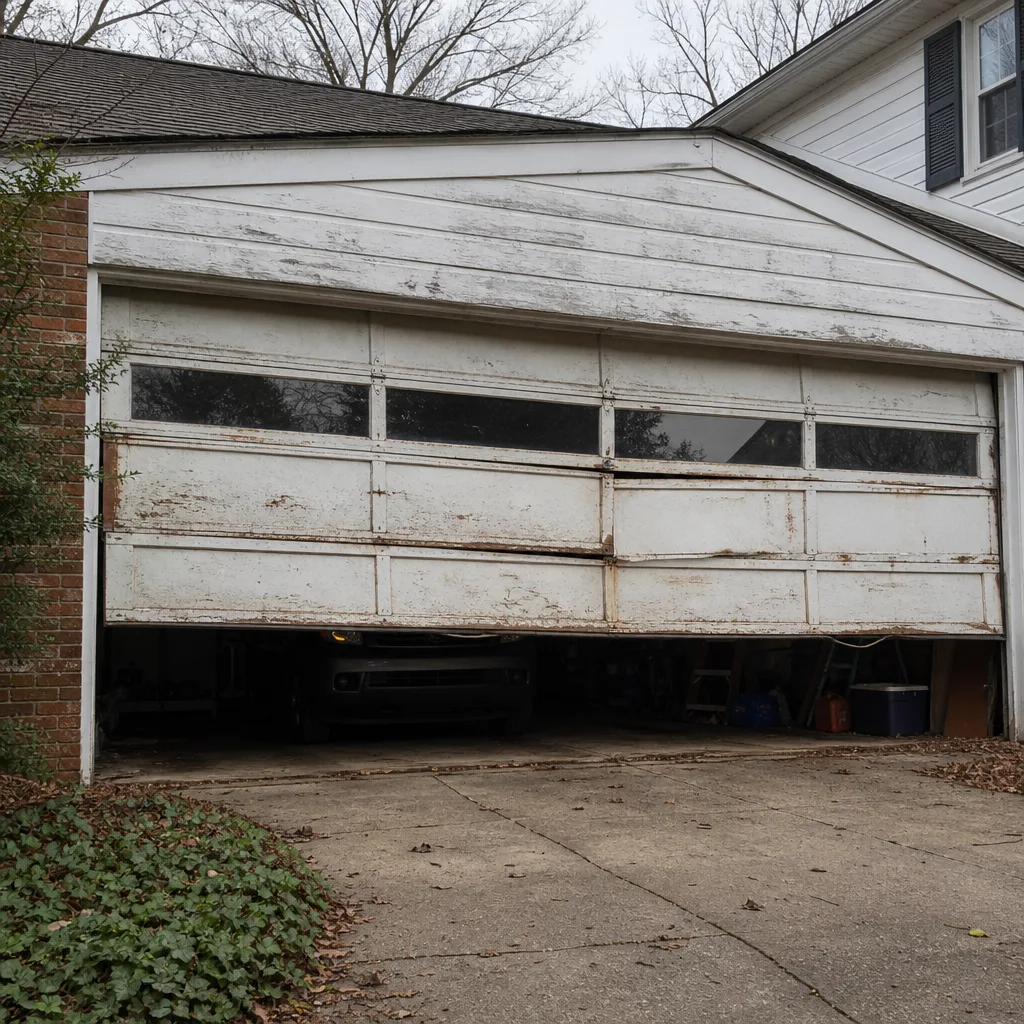 Before
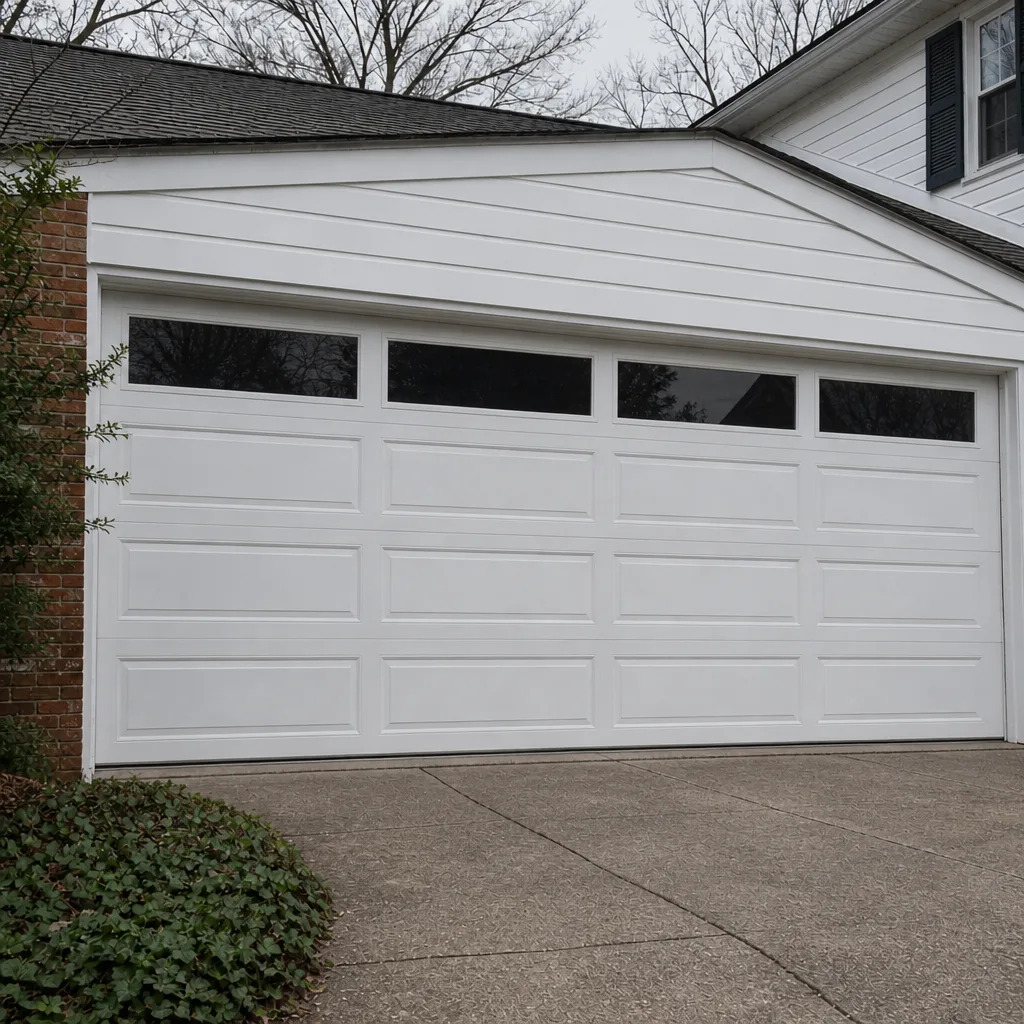 After
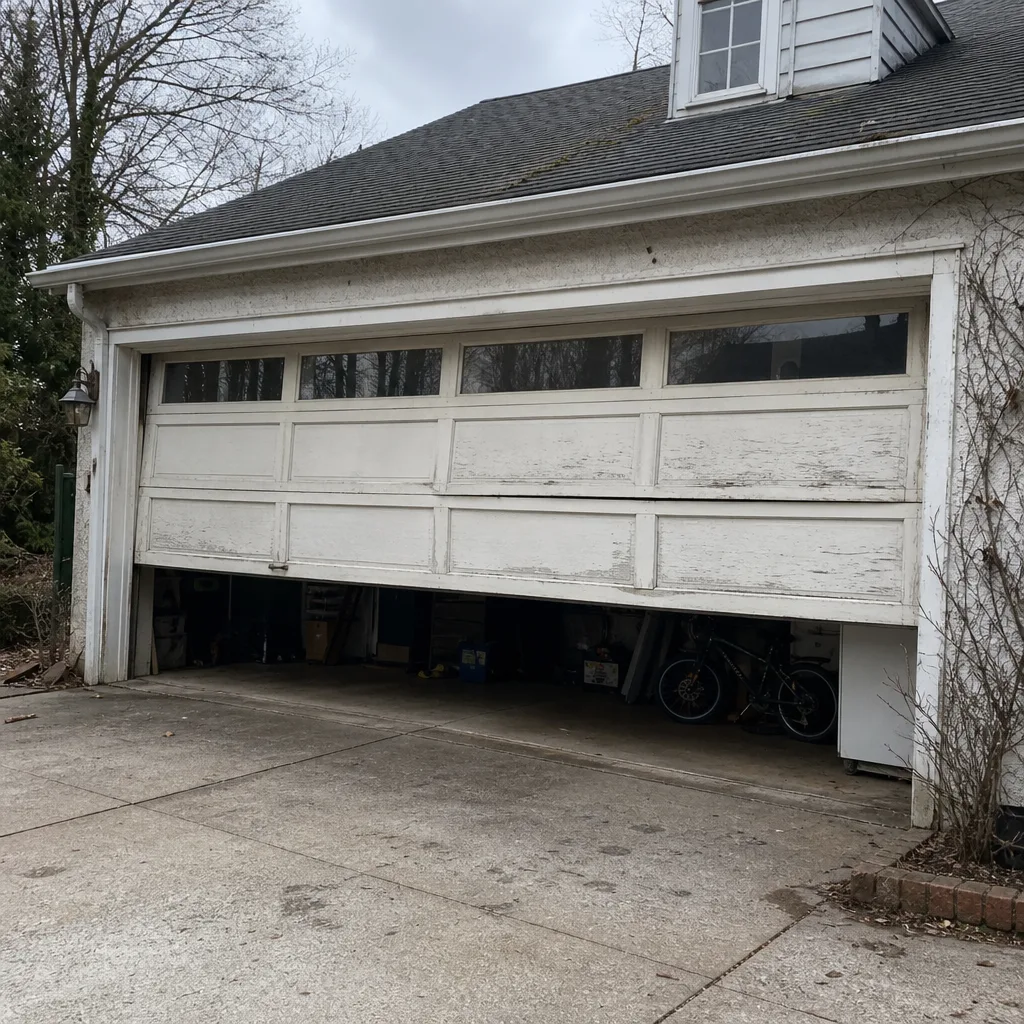 Before
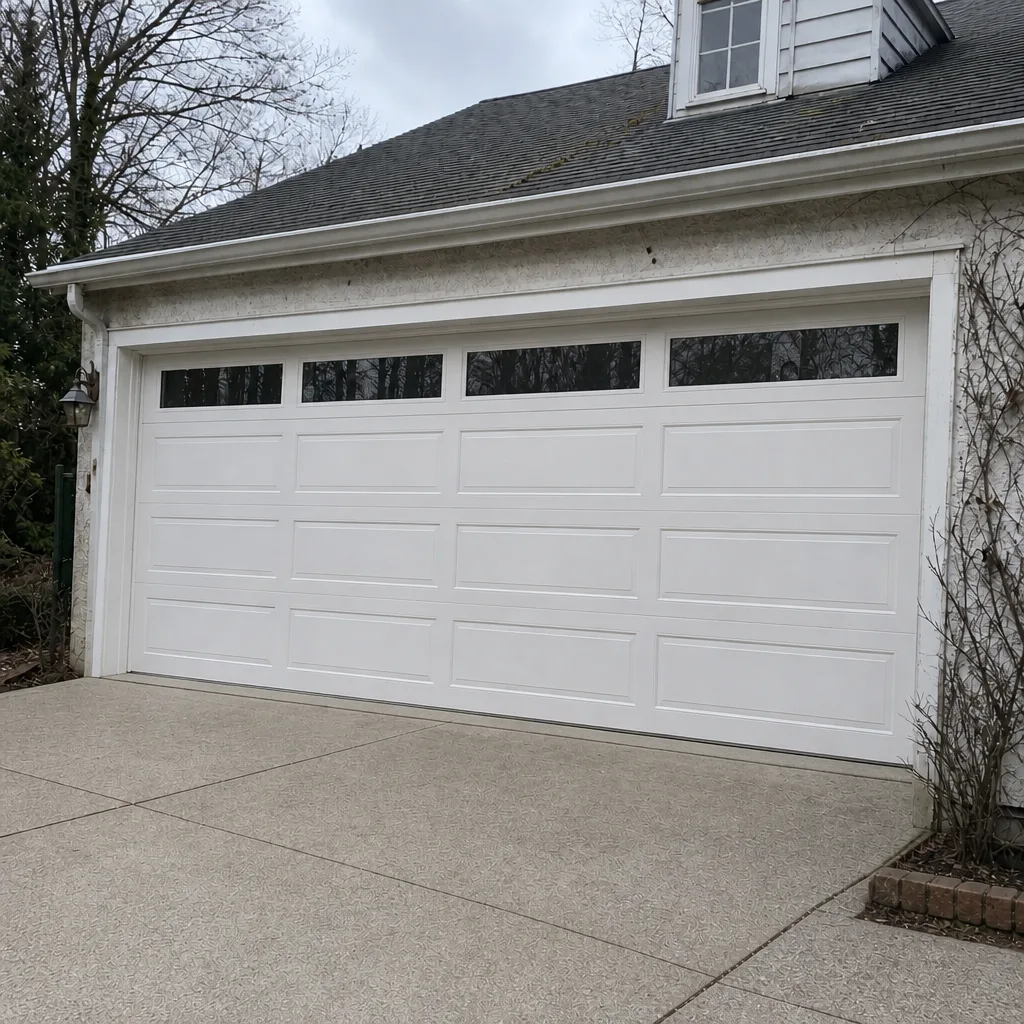 After
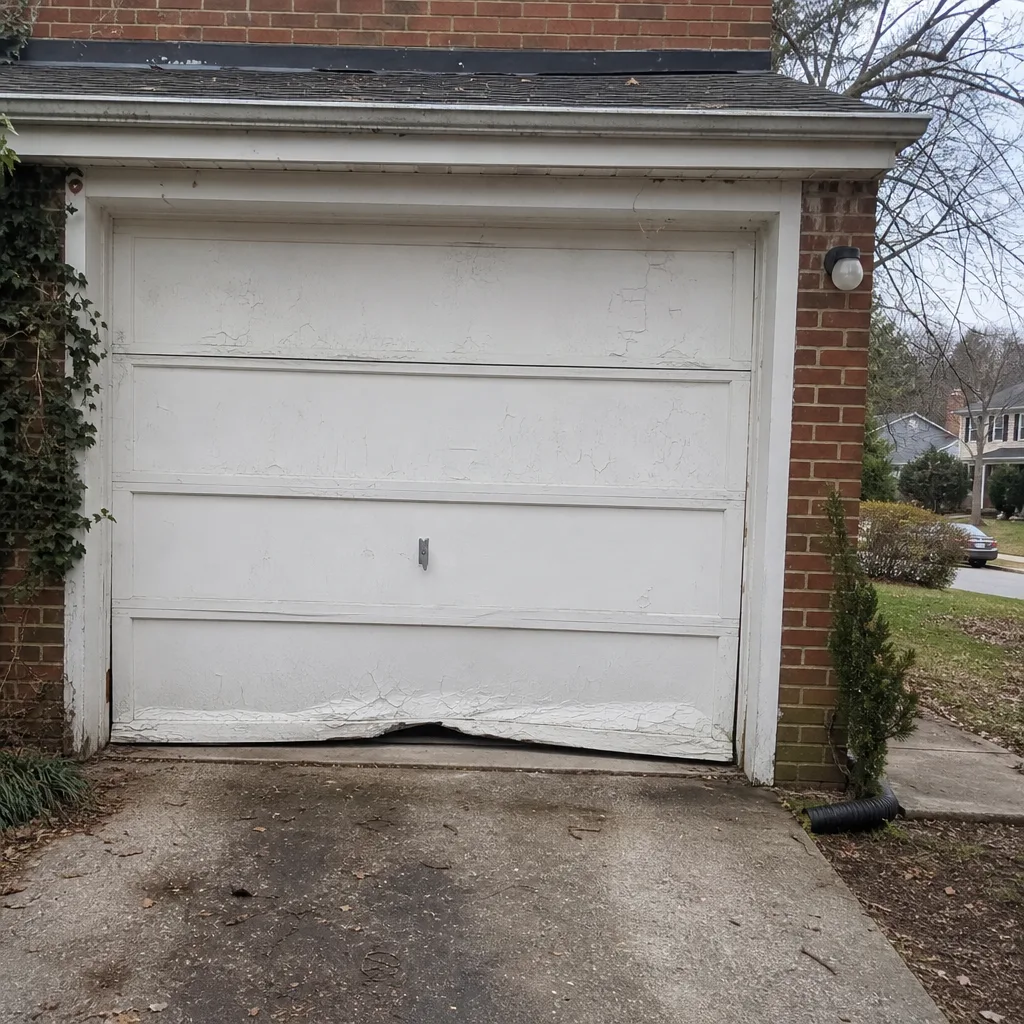 Before
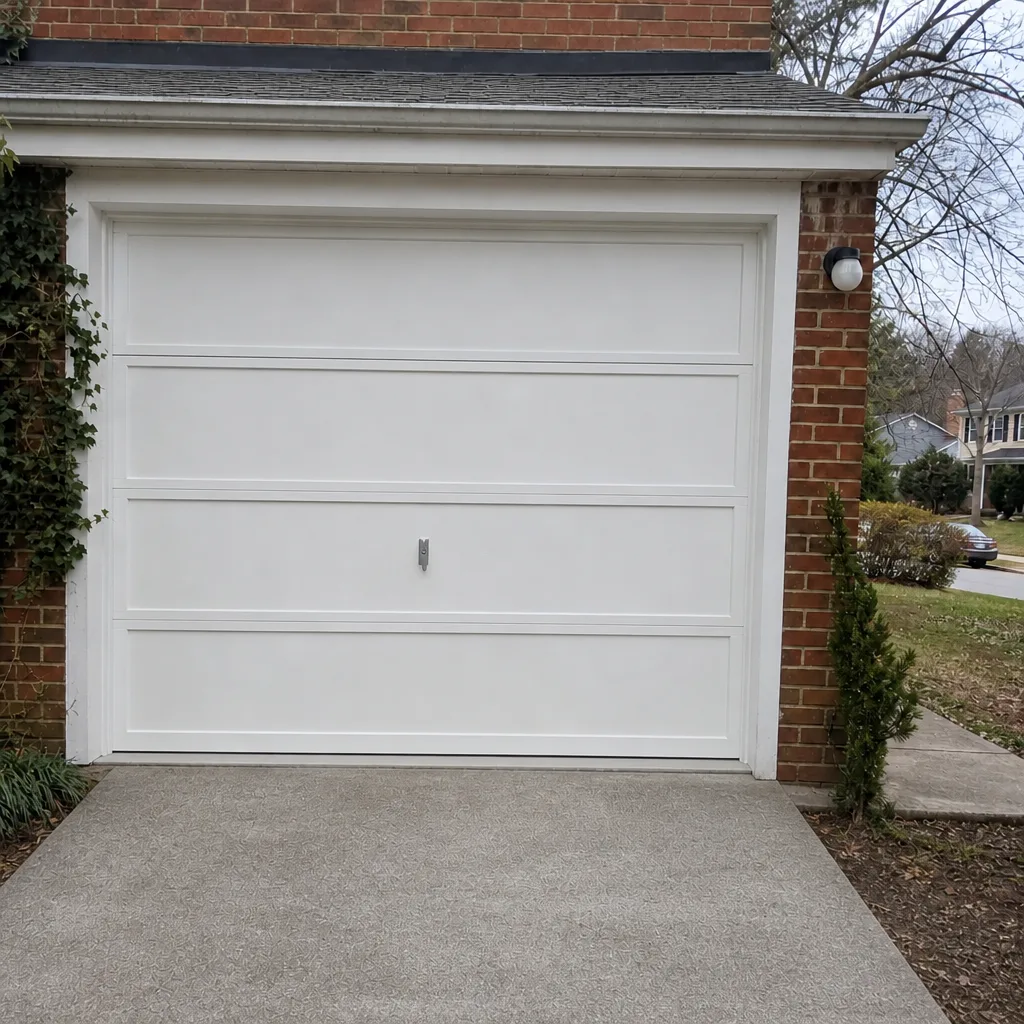 After
When to Call a Professional
Call a professional the moment the job involves a spring, a cable, a track realignment, door panel replacement, or a full installation. Call immediately if the door is stuck open, hanging off its tracks, or making a grinding sound that wasn’t there yesterday. Call before you use the opener on a door that’s suddenly heavy. And call before any DIY task where you’re not sure exactly what’s under tension, because that’s the only question that really matters. Chevy Chase Garage Door Repair offers free estimates in Chevy Chase. We give a written price and agree to it before any work starts, and we work on the brand of door and opener you already own, whether that’s an old Craftsman unit or a newer LiftMaster smart opener. Call (855) 684-8076. We answer 24/7. Fast dispatch from 7am to 7pm, Sunday through Friday.
Frequently Asked Questions
Typical spring repair costs vary by door weight, spring type, and whether one or both springs need replacement, and a matched pair usually costs about twice a single spring. You’ll get an exact figure in a written estimate before any work starts. Call (855) 684-8076 for an exact quote – estimates are free.
No, we don’t recommend it. Torsion and extension springs store energy that can cause serious injury the moment it releases, and the tools required are not standard homeowner equipment. A trained technician is the right choice even if you’re confident in your DIY skills elsewhere.
Yes, stuck doors and broken springs are exactly the kind of job we handle as same-day or emergency work. We answer 24/7, and fast dispatch runs from 7am to 7pm, Sunday through Friday. A call outside those hours is booked into the next opening. Call (855) 684-8076 for the fastest response.
Not after we’ve agreed to it. The price is quoted in writing and confirmed with you before any work starts, and the written estimate sets the final price. If something new turns up during the job, we’ll talk to you before adding anything.
The local professionals we connect you with are licensed and insured as their state requires, and we’d encourage you to ask for the specifics before the visit if it matters to you. Our technicians have up to 15 years of experience across the major brands, including LiftMaster, Chamberlain, Genie, Clopay, Amarr, Wayne Dalton, Craftsman, and Raynor.
Most DC-area jurisdictions require a permit for full garage door replacement, but the exact rule varies by city and county and can change, so check with your local building department before you order a door. If you’re in an area with architectural review, confirm the door style is approved first. For a free measure and a written price on an installation, call (855) 684-8076.
The Bottom Line
The DIY vs. professional decision on a garage door isn’t about whether you’re capable. It’s about which components are safe to touch. Weatherseals, rollers, hinges, remotes, and sensors are reasonable homeowner work in Chevy Chase and the surrounding neighborhoods. Torsion springs, extension springs, cables, track realignment, panel swaps, and full installations are not, because they involve stored energy or the door’s weight and the wrong handling can hurt you. Beyond safety, the practical rule is that diagnosis comes before replacement, and a written estimate comes before any work. If your door or opener falls on the professional side, that’s what we’re here for. Chevy Chase Garage Door Repair, (855) 684-8076. We answer 24/7. Fast dispatch from 7am to 7pm, Sunday through Friday.
Start with a free estimate from the team at Chevy Chase Garage Door Repair, and we’ll tell you honestly which side of the line your repair sits on.
Written by the team at Chevy Chase Garage Door Repair.